


A cool compress, gentle facial massage, and time spent upright are simple first steps for morning puffiness. Learning how to reduce facial swelling and puffiness at home often starts with these soothing measures, especially when swelling is mild and fades as the morning goes on. If facial swelling comes with difficulty breathing, seek emergency care.
A puffy face can feel unsettling when you first look in the mirror. Fluid may collect in facial tissues overnight, while salty foods or alcohol can contribute to water retention. Mild morning puffiness often settles after you get up and spend time upright.
Here, you’ll find practical ways to ease temporary puffiness, from a cool compress or chilled tea bags to gentle massage. You’ll also learn which everyday habits may contribute, how to approach recurring swelling, and when symptoms call for medical attention.
Key Takeaways
- Notice whether morning puffiness eases after you’ve been upright for a while, and consider what you ate or drank the night before.
- Try gentle facial massage with light pressure, moving in a calm, deliberate way.
- Look for possible links between puffiness and alcohol, interrupted sleep, or allergens.
- A cool compress or chilled tea bags can be a simple way to soothe the under-eye area.
- Know when swelling needs medical attention, especially if it comes with difficulty breathing.
1. What are the symptoms of morning face puffiness?
A practical approach to how to reduce facial swelling and puffiness begins with noticing when it appears. Morning puffiness often shows around the eyes, cheeks, or jaw after a night lying flat. The skin may look fuller and facial features less defined. Fluid buildup in facial tissues can cause this temporary change, which often improves after you get up and spend time upright.
Eating salty food late in the evening can contribute to water retention. Sodium affects the body’s fluid balance, and excess fluid may collect in areas such as the face. Drinking water supports the body’s elimination of excess sodium through urine. Notice whether puffiness follows a salty meal, alcohol, or a change in sleep.
Can hydration, sleep, or reducing salt and alcohol help with facial puffiness? Yes. Drinking water, limiting high-sodium foods and alcohol, and getting restful sleep may reduce common contributors. These habits support fluid balance, especially when puffiness follows a late, salty meal or drinking.
For a calm start, place a cool, clean compress over closed eyes for a few minutes. Cold may constrict facial blood vessels and help ease swelling. Keep the compress comfortably cool rather than placing ice directly against delicate skin. A chilled washcloth is a simple option for the cheeks or under-eye area.
Gentle movement can also help. A short walk after waking encourages circulation, while light fingertip strokes can move from the center of the face outward. Use a soft touch around the eyes, where skin is delicate. Avoid vigorous rubbing, particularly if the area feels sore, irritated, or unusually warm.
Regular activity supports a steady routine. The Centers for Disease Control and Prevention recommends that adults in the United States get 150 minutes of exercise each week. Walking, cycling, or another comfortable activity can fit into the week. Movement may help circulation, but it does not explain every case of facial swelling.
How can you prevent recurring facial puffiness? Limit salty foods and alcohol late in the evening, stay hydrated, and slightly elevate your head during sleep. If allergies seem connected, reduce exposure to known triggers and observe whether symptoms change. These steps offer a practical starting point when considering how to reduce facial swelling and puffiness at home.
Pay attention to the pattern. Mild swelling that fades within a few hours differs from sudden swelling, severe pain, or puffiness that lasts more than a few days. Difficulty breathing with facial swelling requires emergency care. Persistent or worsening symptoms can point to an underlying issue, so note when they begin and what accompanies them.
2. Jade rolling and lymphatic drainage
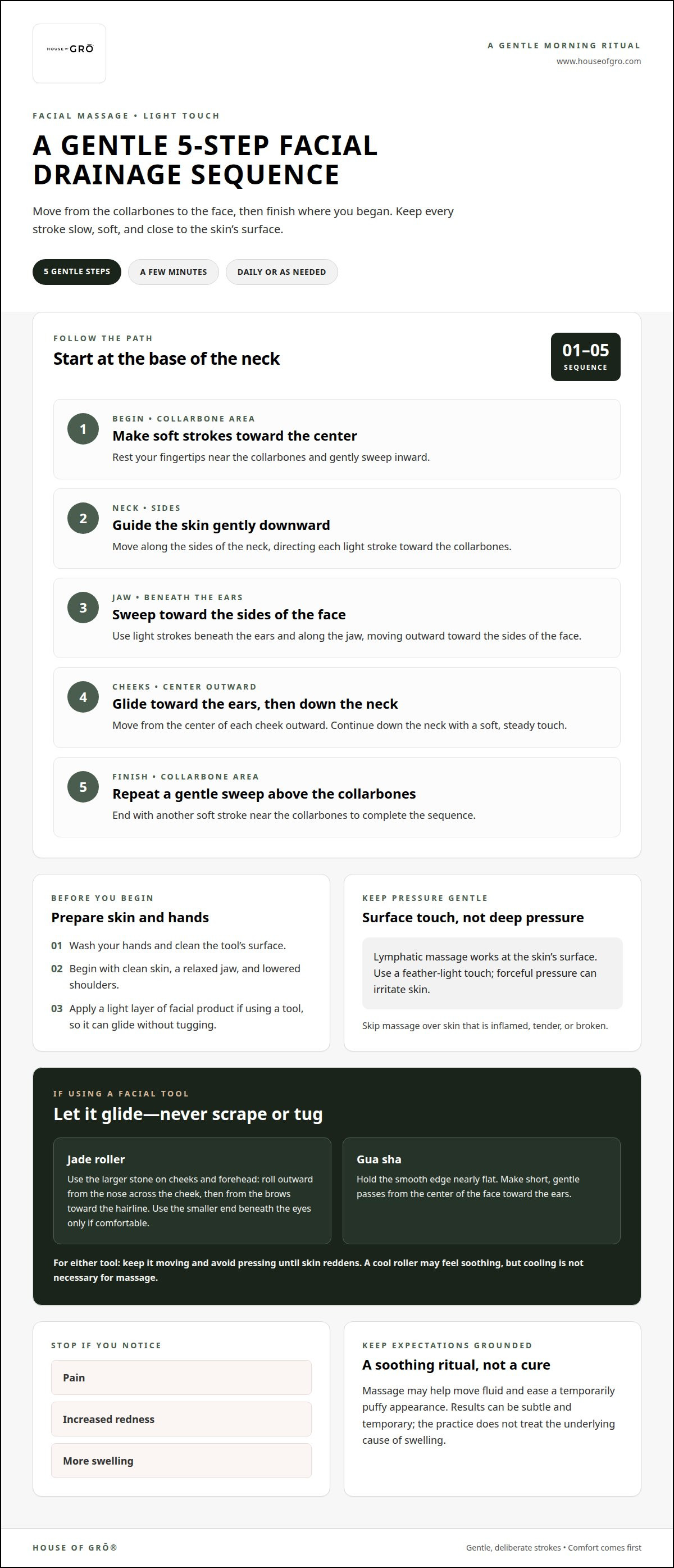
A jade roller or gua sha tool can make gentle facial massage feel more structured. Light strokes may help move fluid through the face and ease a temporarily puffy appearance. These tools don’t treat the underlying cause of swelling, and forceful pressure can irritate skin. Think of the practice as a quiet morning ritual, not a way to reshape facial features.
Before using a tool, wash your hands and clean its surface. Apply a light layer of facial product so the stone can glide without tugging. Begin with clean skin, a relaxed jaw, and lowered shoulders. If your skin is inflamed, tender, or broken, skip the massage instead of rubbing the area.
For a simple lymphatic sequence, start with the pads of your fingers. Keep each movement slow and gentle:
- Rest fingertips near the collarbones and make soft strokes toward the center.
- Move to the sides of the neck, guiding the skin gently downward toward the collarbones.
- Use light strokes beneath the ears and along the jaw, moving toward the sides of the face.
- Glide from the center of each cheek outward toward the ears, then down the neck.
- Finish with another gentle sweep above the collarbones.
This order starts near lymph-node areas, including the clavicles and sides of the neck, before moving across the face. The underarms also contain lymph nodes, though they aren’t part of a facial tool’s path. Manual lymphatic drainage can take a few minutes and may be done daily or as needed. Use a feather-light touch; lymphatic massage works at the skin’s surface, not through deep pressure.
With a jade roller, use the larger stone on the cheeks and forehead. Roll outward from the nose across the cheek, then from the brows toward the hairline. Use the smaller end beneath the eyes only if it feels comfortable. Keep the tool moving and avoid rolling back and forth over one spot. A cool roller can feel soothing, but it isn’t necessary for the massage.
Gua sha follows a similar outward-and-downward direction. Hold the smooth edge nearly flat against the skin, then make short, gentle passes from the center of the face toward the ears. Don’t scrape or press until the skin reddens. The tool should glide, not pull. Stop if you notice pain, increased redness, or more swelling.
Results can be subtle and temporary. Massage may help fluid drain, but persistent swelling or inflammation needs attention beyond a beauty tool. For an unhurried routine, explore gentle daily skincare practices alongside careful massage.
3. What causes a puffy face in the morning?
A puffy face can follow fluid buildup in facial tissues overnight. Alcohol is one possible contributor, alongside salty food, disrupted sleep, allergies, and some health conditions. Notice whether swelling appears after drinking, affects the under-eye area, or continues through the day. One morning of puffiness doesn’t identify the cause, but repeated timing can offer a useful clue.
Alcohol can increase urination and lead to mild dehydration. Afterward, the body may retain water, and puffiness can appear in the face or elsewhere. Alcohol-related dehydration and inflammation can both contribute to a swollen appearance. The effect varies with the amount consumed, hydration, sleep, and what else you ate that evening.
Alcohol-related swelling usually goes away within 12 to 24 hours, as the body processes the alcohol. Heavy drinking, defined as more than eight alcoholic drinks per week, can cause under-eye puffiness. If your eyes look swollen after a night of drinking, give your body time to recover, drink water, and avoid adding more alcohol. A cool compress can soothe the area while the swelling settles.
To understand a recurring pattern, keep a simple note on your phone. Record the evening’s alcohol, salty foods, bedtime, and morning symptoms. Compare a morning after drinking with one after an alcohol-free evening. Also note whether swelling fades after you get upright or remains unchanged. These details can help distinguish a short-lived response from a pattern that warrants medical attention.
Alcohol isn’t the only possible underlying factor. Hashimoto’s disease, kidney or liver issues, and excess cortisol can contribute to morning facial puffiness. Interrupted sleep can also affect facial appearance; even two nights of disrupted sleep can make a difference. Consider whether swelling occurs alongside other new symptoms rather than assuming a drink caused every episode.
Pay attention to duration and severity. Sudden swelling, severe pain, fever, or swelling in the mouth or airways needs prompt medical attention. Difficulty breathing with facial swelling requires emergency care. If puffiness persists for more than a few days, worsens, or doesn’t ease during the day, speak with a healthcare provider. A pattern that continues despite changes to alcohol and sleep may point to a cause beyond temporary fluid retention.
4. Allergens that may cause facial puffiness
Allergic reactions are one possible cause of facial swelling. Foods and medications can trigger reactions in people who are sensitive to them. Notice whether puffiness follows a particular meal or medicine, and record the timing, other symptoms, and possible sources. A simple note can help you recognize a recurring pattern without assuming every swollen morning has the same cause.
Look for a connection rather than testing a suspected trigger yourself. If swelling repeatedly follows a specific food or medication, avoid known allergens and discuss the pattern with a doctor. Anaphylaxis is a life-threatening allergic reaction that can include facial swelling. Swelling with difficulty breathing or swelling in the mouth or airways calls for immediate emergency care.
What medications can cause facial swelling or puffiness? A medication that triggers an allergic reaction can cause facial swelling. Avoid medicines you know cause an allergic reaction, and tell your doctor which medicine preceded the symptoms.
Allergies aren’t the only possible cause. Facial swelling can also occur with sinusitis or an infection, while a tooth abscess may contribute. Consider the full pattern: where swelling appears, whether it recurs, and whether fever or swelling in the mouth accompanies it. These details matter more than trying to treat every cause with the same home remedy.
What symptoms suggest facial swelling is caused by an infection or dental problem? Facial swelling alongside a known tooth problem may point to a dental source, including a tooth abscess. Fever or swelling in the mouth or airways needs immediate medical attention.
Treatment depends on the cause. Allergy-related swelling may be treated with antihistamines; corticosteroids may be used for rash- or allergy-related swelling. Nasal irrigation may be used when sinusitis is the cause, while infection-related swelling may require antibiotics. These approaches address different sources. A cool compress may soothe the surface, but it doesn’t treat an infection or replace care specific to the cause.
For prevention, avoid foods and medications known to cause allergic reactions. If a new episode follows a familiar trigger, write down what happened and when, then share those details with a doctor. Good oral hygiene can help prevent tooth abscesses that may contribute to facial swelling. Gentle massage may support drainage for temporary puffiness, but don’t massage an area that is painful, worsening, or linked with fever. Difficulty breathing with facial swelling is an emergency.
Any medication that triggers an allergic reaction in a sensitive person can cause facial swelling or puffiness.
5. Caffeine products and cold tea bags for under-eye puffiness
If you’re exploring how to reduce facial swelling and puffiness around the eyes, begin with gentle cooling. Cold temperatures may constrict facial blood vessels and potentially reduce swelling. Rest a clean, cool cloth over closed eyes for a few minutes. Keep it comfortable against the skin, and remove it if the cold feels irritating. The goal is soothing comfort, not intense icing.
Chilled tea bags can serve as a simple compress. Let used tea bags cool fully, then place them over closed eyes while resting. Cooling is the practical part of this approach. Caffeine eye products are another option in a skincare routine, but they aren’t the same as a cold compress. Follow product directions and avoid getting it into your eyes.
For a reusable option, chill an eye mask or roller and glide it gently over the under-eye area. Keep the tool moving rather than pressing on one spot. A few minutes with a cool compress may ease under-eye puffiness. Avoid placing ice directly against delicate skin, and stop if the cold causes discomfort.
Cold water can feel refreshing after waking. A cool shower may stimulate circulation and reduce inflammation, while a hot shower can have the opposite effect. Choose a temperature that feels comfortable. Cold exposure isn’t a substitute for care when swelling is sudden, painful, or persistent.
Sauna use is sometimes suggested for puffiness because sweating causes water loss. That doesn’t make a sauna a dependable under-eye treatment. If you’re already dehydrated, more sweating may not be soothing. Consider your hydration and comfort, especially after exercise or time in hot weather.
For a measured routine, rinse your face gently with cool water, then rest a chilled compress over closed eyes for a few minutes. Pat the skin dry and apply your usual eye product as directed. Notice whether the appearance changes after waking or later in the day. This simple sequence can help you decide whether cooling belongs in your routine for how to reduce facial swelling and puffiness.
Choose the gentlest method that feels comfortable. A cool cloth or tea bags can offer a simple ritual, while a caffeine product can remain part of established skincare. Keep tools clean, avoid rubbing the eye area, and stop if irritation develops. For a considered daily skincare ritual, explore a refined skincare routine.
House of GRŌ®: AT DAWN Rejuvenating Daytime Oil
At Dawn Rejuvenating Daytime Oil can be a considered skincare step after your morning routine when you have temporary puffiness. It doesn’t treat swelling or its underlying cause. Instead, it fits alongside gentle cleansing and the cooling approaches described above.
House of GRŌ® creates skincare with adaptogenic mushrooms and organic botanicals, including wild-harvested Chaga from Northern Maine. If your aim is to make daytime skincare feel more intentional, AT DAWN can be part of that daily ritual. For the delicate eye area, EYE DETOX brightening oil is another skincare option in the range.
Keep skincare separate from care for persistent, painful, or sudden swelling. For questions about House of GRŌ® skincare, you’re welcome to contact the brand.
Make your next step a gentle one
If you’re learning how to reduce facial swelling and puffiness, notice patterns without expecting skincare to treat swelling itself. A simple note about sleep, meals, alcohol, or recurring symptoms can help you decide what to adjust and when to seek medical advice. Keep your routine gentle and give your skin space to respond.
For daily care, House of GRŌ® offers At Dawn Rejuvenating Daytime Oil, After Dark Restorative Night Serum, and Touch Hydrating Body Serum. These products can complement a considered skincare ritual, separate from care for persistent or sudden swelling.
Explore the offerings and choose what feels aligned with your routine. Discover House of GRŌ® skincare and take your next step toward intentional daily care.
Frequently Asked Questions
What can I do at home to treat a puffy face?
For mild puffiness, try a cool compress, gentle facial strokes, and an easy walk after waking. Keep pressure light, especially around the eyes, and stop if the skin becomes irritated. If puffiness follows a salty meal, drink water and choose lower-sodium foods that day. Note what seems to precede it. Home care is for temporary swelling, not sudden or severe symptoms.
Are there different severity levels of facial edema?
Facial edema can range from mild, short-lived puffiness to swelling that needs urgent attention. These descriptions are practical, not a formal grading scale. Mild swelling may fade during the morning; sudden swelling, severe pain, fever, or swelling in the mouth or airways is more concerning. The accompanying symptoms and how quickly swelling changes matter.
What are the symptoms of morning face puffiness?
Morning puffiness may make the eyelids, cheeks, or jaw look fuller than usual. Facial contours can appear less defined, and the skin may feel tight. Temporary fluid-related puffiness often eases after you’ve been upright for a while. Notice whether both sides look similar, whether one area is tender, and whether swelling fades or persists. These observations help you describe the pattern clearly.
What causes a puffy face in the morning?
A puffy morning face often reflects fluid collecting in facial tissues while you sleep. Salty evening food, alcohol, interrupted sleep, and allergies can contribute. Some medical contributors include Hashimoto’s disease and kidney or liver issues. Track the evening before and the morning after, including meals, drinks, sleep, and other symptoms. A repeating pattern can help distinguish a temporary trigger from swelling that persists.
What is facial swelling?
Facial swelling is visible or felt fullness caused by fluid building up in facial tissues. It may affect one area, such as the eyelids, or involve broader areas of the face. Appearance alone doesn’t reveal the cause. Allergies, infection, sinusitis, and temporary fluid retention are all possible factors. Consider when swelling began, where it appears, and whether other symptoms occur.
When is it a good idea to contact a doctor about face puffiness?
Contact a doctor when facial swelling is sudden, painful, worsening, or lasts more than a few days. Also seek medical advice if recurring puffiness doesn’t improve with simple home measures or remains through the day. Fever or swelling in the mouth or airways needs immediate medical attention. Difficulty breathing with facial swelling is an emergency. Describe when it began and any possible food or medication triggers.
What are common causes of facial swelling and puffiness?
Common possibilities include fluid retention after high-sodium food, alcohol-related dehydration, allergies, sinusitis, and infection. A dental abscess can also contribute to facial swelling. Some underlying health issues, including kidney or liver problems, may be involved. Consider location and timing: swelling around the eyes after waking differs from swelling accompanying a tooth problem or an allergic reaction.
How can you reduce facial puffiness quickly at home?
For temporary under-eye puffiness, place a clean, cool compress over closed eyes for a few minutes. A chilled tea bag can serve as a gentle compress, while light outward facial strokes may feel soothing. Sit upright and avoid rubbing or pressing hard on the skin. If swelling is sudden, severe, or paired with difficulty breathing, don’t rely on home care; seek urgent medical attention.