


Facial oil can suit acne-prone skin, but the right choice depends on the formula and how your skin responds. Lightweight oils high in linoleic acid, such as rosehip or grapeseed, may be a starting point; jojoba closely resembles the skin’s natural sebum. When choosing the best face oil for hormonal acne, consider the full formula and how it fits your routine, not just the label.
If breakouts make you hesitant to add another layer, that’s understandable. Comedogenic ratings offer a point of reference, but they can’t predict exactly how an oil will feel on your skin. A gradual, considered approach can help you introduce one without overcomplicating your daily care.
Here, you’ll learn how facial oils may fit acne-prone skin, what comedogenic ratings can and can’t tell you, and how to build a gentle routine. We’ll also cover oils to consider and how to introduce a new one thoughtfully. A calmer routine starts with understanding what your skin needs and keeping each step simple.
Key Takeaways
- Facial oils may fit acne-prone skin, but the formula and your skin’s response matter more than a “non-comedogenic” label alone.
- Use comedogenic ratings as a reference, not a guarantee of how an oil will affect your skin.
- Keep your routine gentle and introduce one new product at a time so you can notice how your skin responds.
- Patch-test a new facial oil for 24 hours before applying it to your face.
- For application, warm 2-3 drops between your hands and smooth onto clean, slightly damp skin.
1. Can Facial Oils Help With Hormonal Acne?
Facial oils may suit acne-prone skin, but they don’t treat hormonal causes of breakouts. Their role is narrower: adding softness and helping skin feel comfortable. The best face oil for hormonal acne is therefore a personal match, not a universal solution. Start by considering the oil’s texture, your skin’s sensitivity, and the rest of your routine.
Jojoba is a useful starting point because it closely resembles the skin’s natural sebum. Rosehip and grapeseed are lightweight oils high in linoleic acid, often considered for oily or acne-prone skin. Hemp seed and sunflower oils offer other options to compare by texture and your skin’s response. Sea buckthorn is another ingredient in products marketed for blemish-prone skin. Its presence alone doesn’t establish that a formula will suit you.
Look beyond the oil name. A face oil may contain one oil or combine several with fragrance and other ingredients. For sensitive skin, a shorter ingredient list can make it easier to identify what you tolerate. If you have oily skin, a lightweight-feeling formula may be more comfortable than a rich blend. Introduce one product at a time instead of layering jojoba, rosehip, and sea buckthorn together. That keeps your routine simple and makes your skin’s response easier to assess.
Some oils may feel too heavy for breakout-prone skin. Olive and coconut oils are commonly advised against during acne flare-ups because they may clog pores. Comedogenic ratings can help compare ingredients, but they don’t predict everyone’s response. The complete formula, amount applied, and your skin’s sensitivity all matter. If a new oil seems to coincide with increased congestion, pause it instead of adding another oil to compensate.
Face oils marketed for acne and blemishes often feature jojoba, rosehip, grapeseed, hemp seed, sunflower, or sea buckthorn. Treat those labels as a starting point, not proof that a product treats acne. Choose one formula that suits your skin’s texture preferences and ingredient needs. For oily or sensitive skin, a lightweight, uncomplicated oil may be a more considered first choice than a heavily scented blend.
Choose a dermatologist over face oil when breakouts are painful, persistent, scarring, or affecting your wellbeing. A dermatologist can assess your acne and discuss care suited to its severity; facial oil is not a substitute for that assessment.
For budget-conscious shoppers in the United States, compare single-ingredient jojoba, sunflower, hemp seed, rosehip, and sea buckthorn oils. Cost depends on bottle size, sourcing, processing, and whether the product is pure oil or a blend. Compare those details and the ingredient list rather than assuming every oil or formula has the same price.
2. Whether facial oils can suit acne-prone skin
Acne-prone skin can sometimes tolerate facial oil, especially when the formula feels lightweight and you apply it sparingly. An oil adds another layer to your routine, so consider what your skin already gets from cleanser, moisturizer, and acne products. A simple formula is easier to assess than a blend with many unfamiliar ingredients. The useful question isn’t whether all oils suit acne, but whether a specific formula fits your skin and routine.
Start with the full ingredient list, not the front-label promise. Jojoba, rosehip, and grapeseed oils are often considered for blemish-prone skin. Lightweight oils high in linoleic acid, including rosehip and grapeseed, may be a practical place to begin if your skin feels oily. A product’s texture can help you decide whether it feels comfortable, but it can’t tell you how your pores may respond over time.
Which non-comedogenic face oils are suitable for acne-prone skin? Lightweight jojoba, rosehip, and grapeseed oils are common options to consider. No label can predict everyone’s response, so assess the finished formula and introduce it carefully.
Jojoba deserves a closer look because it closely resembles the skin’s natural sebum. That similarity may appeal if you want an oil that feels familiar on your skin. It still isn’t a treatment for hormonal acne, and a formula containing jojoba may include other ingredients. Check the full list, especially if fragrance or several botanical extracts have bothered your skin before.
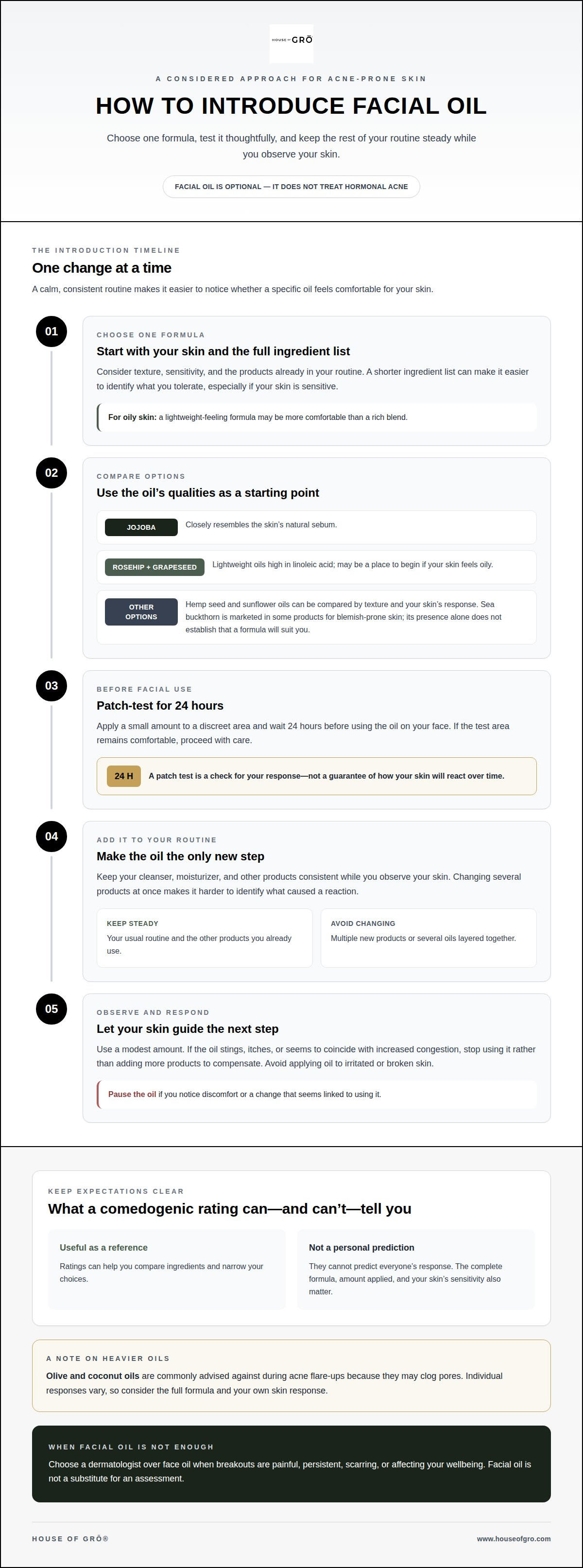
How can you patch test and introduce face oil safely? Apply a small amount to a discreet area and wait 24 hours before using it on your face. If the test area remains comfortable, add the oil as the only new step in your routine. Keep your cleanser, moisturizer, and other products consistent while observing your skin. Changing several products at once makes it harder to identify which one caused a reaction.
Use a modest amount and avoid applying oil to irritated or broken skin. If a formula stings, itches, or seems to coincide with increased congestion, stop using it rather than layering on more products. Also consider where the oil sits in your routine: a rich moisturizer beneath it may leave your skin feeling heavier than either product alone. The combination matters, not just the oil on its own.
For sensitive or oily skin, choose a short ingredient list and a lightweight feel. Compare jojoba with a rosehip or grapeseed formula, then introduce one option at a time. A “non-comedogenic” claim can narrow your choices, but your own response is the practical guide. Keep the rest of your routine calm while you assess the fit.
3. A gentle skincare routine for hormonal acne
A steady routine makes it easier to see how each product affects your skin. Begin with a gentle cleanser, then use your usual skincare as directed. Keep the number of steps manageable. Adding several new products at once can make it difficult to tell which one is behind a change in comfort or congestion. Facial oil is an optional finishing step, not the foundation of acne care.
Apply oil after cleansing, while skin is slightly damp. Warm 2-3 drops between your hands, then press them gently over your face. Avoid rubbing or using more simply because your skin feels tight. A thin layer is easier to assess than a heavy coating. If you already use a moisturizer, notice how the oil and moisturizer feel together before adding other layers.
Keep acne treatments in their usual place and follow their directions. Don’t blend face oil directly into a treatment or add several new formulas during the same routine change. That makes it harder to identify what your skin tolerates. If a prescribed product comes with specific instructions, follow them when using optional skincare alongside it.
Introduce one new facial oil at a time. Patch-test it on a small, discreet area and wait 24 hours before applying it to your face. If the area stays comfortable, use the oil in a simple routine and observe how your skin responds. Keep your cleanser, moisturizer, and other established products consistent during the introduction.
A practical morning sequence is cleansing, your usual skincare, moisturizer if needed, and sunscreen. In the evening, cleanse, apply any acne treatment according to its directions, then use moisturizer. Add face oil only if it feels comfortable in that sequence. If layering feels heavy, use less oil or leave it out. Your routine should feel considered, not crowded.
There isn’t one universal list of products everyone must avoid pairing with face oil. Instead, don’t introduce a new oil on the same day as a new exfoliant or acne treatment. If irritation appears, simplify your routine by pausing the newest addition. Persistent or painful breakouts call for professional care rather than more layers of skincare.
Keep the broader routine gentle, too. Avoid scrubbing active breakouts, and choose familiar products over frequent experiments. Consistent sleep also supports refreshed-looking skin; aim for 7 to 8 hours of uninterrupted rest. A calm routine gives you a clearer way to notice what feels comfortable and what does not.
4. Comedogenic ratings and breakouts
A comedogenic rating is a rough guide to an ingredient’s potential to clog pores. It can help you compare ingredients, but it can’t predict exactly how a finished face oil will behave on your skin. A product’s formula includes more than its featured oil. For example, a jojoba blend may also contain fragrance, plant extracts, or other oils. Read the full ingredient list, not just the rating for one ingredient.
Think of a rating as one consideration, not a pass-or-fail score. A lower rating doesn’t guarantee an oil will suit your skin, and a higher one doesn’t prove it will cause a breakout. Skin response can vary with sensitivity, the amount applied, and other products in your routine. If a rosehip formula includes several unfamiliar ingredients, the rating for rosehip alone won’t describe the whole product.
Use ingredient names to make a more thoughtful comparison. Jojoba, rosehip, grapeseed, hemp seed, sunflower, and sea buckthorn can appear in facial oils marketed for blemish-prone skin. Compare formulas and textures, then choose one product to try. Reviewing the complete ingredient list also helps you spot familiar triggers, such as a fragrance that has irritated your skin before.
Application can affect how an oil feels, too. A thick layer over moisturizer may feel heavier than a small amount applied to clean, slightly damp skin. Keep your other products steady while introducing the oil. If you add a new cleanser, exfoliant, and face oil together, a breakout or irritation becomes harder to trace. One change at a time gives you a clearer way to assess the formula.
Keep a simple note of the product name, ingredients, and when you began using it. Record changes such as new congestion, redness, or itching, along with any other routine changes. This makes it easier to compare your experience with the label’s claims. If you suspect a reaction, stop using the newest product and simplify your routine instead of layering on another oil.
Comedogenic ratings are most useful as a first filter. Consider them alongside the formula’s ingredient list, the product’s feel, and your own observations. A label can’t replace a careful trial, and an oil can’t resolve every cause of acne. If breakouts are painful, persistent, or leaving scars, seek professional guidance rather than relying on a rating to choose skincare.
5. What face oils are best for hormonal acne-prone skin?
The best choice depends on your texture preferences, sensitivities, and existing routine. For oily or acne-prone skin, rosehip and grapeseed are lightweight oils high in linoleic acid. Jojoba closely resembles the skin’s natural sebum, making it another option to consider. None of these oils treats hormonal causes of acne. Think of them as optional skincare, not a substitute for acne care.
Compare oils by the texture you prefer. Rosehip or grapeseed may appeal if richer products feel heavy. Jojoba is worth considering if you prefer an oil that feels closer to natural sebum. Hemp seed, sunflower, and sea buckthorn also appear in facial oils, but their presence alone doesn’t establish that a formula suits your skin. Check the complete ingredient list before choosing.
For a considered first trial, choose one formula rather than combining several oils. A single-ingredient jojoba oil, for example, makes it simpler to identify the product you’re testing. If you’re comparing a rosehip blend with a sunflower blend, check both labels for fragrance and other ingredients your skin dislikes. The oil name is only part of the formula.
During an acne flare-up, olive and coconut oils are commonly advised against because they may clog pores. That doesn’t mean every other oil will suit everyone. A lightweight texture is a useful preference, not a guarantee. Comedogenic ratings can be one point of comparison, while the full formula and your own response provide important context.
Keep your first application simple. Patch-test the product for 24 hours, then introduce it as the only new step in your routine. Apply 2-3 drops to clean, slightly damp skin, and avoid increasing the amount if it feels comfortable. A heavier layer isn’t automatically more beneficial. Give yourself a clear way to notice whether the formula feels suitable.
Consider your skin’s response alongside the product label. If a new hemp seed or sea buckthorn blend feels too rich, pause it instead of adding another oil to balance it. If a rosehip product contains fragrance and you’re sensitive to fragrance, compare it with a simpler formula. Changing one product at a time makes those comparisons more useful.
For a calm next step, explore botanical skincare and choose a formula with ingredients that suit your routine. Keep the focus on a comfortable texture, a clear ingredient list, and a careful introduction. If breakouts are painful, persistent, or scarring, face oil alone isn’t the right approach; seek guidance from a dermatologist.
Rosehip and grapeseed are lightweight options for acne-prone skin, while jojoba is another option to consider. Choose based on the formula, your texture preferences, and how your skin responds.
House of GRŌ®: AT DAWN Rejuvenating Daytime Oil
At Dawn Rejuvenating Daytime Oil is a considered option if you’re exploring a facial oil for your morning routine. House of GRŌ® makes this daytime oil as part of a skincare range featuring organic botanicals and adaptogenic mushrooms. It’s an option for daily care, not a treatment for hormonal acne. Review the ingredients and introduce it thoughtfully, especially if your skin is sensitive or prone to congestion. Keep your usual routine steady as you assess whether the formula feels comfortable. Explore At Dawn Rejuvenating Daytime Oil from House of GRŌ®.
Make your next skincare step intentional
Choosing the best face oil for hormonal acne is less about finding a universal answer and more about building a routine that feels right for your skin. Keep your approach simple. Notice how each product fits, and let comfort guide whether an optional oil belongs in your daily care. Facial oil can support a skincare ritual, but it isn’t a treatment for hormonal acne.
House of GRŌ® offers AT DAWN Rejuvenating Daytime Oil, AFTER DARK Restorative Night Serum, and TOUCH Hydrating Body Serum for different moments of care. Explore the offerings with your routine in mind, and contact House of GRŌ® for skincare support. A thoughtful next step can begin with a little more clarity and a gentler daily practice.
Frequently Asked Questions
Can Facial Oils Help With Hormonal Acne?
Facial oils can be part of skincare, but they don’t address the hormonal causes of acne. The best face oil for hormonal acne is one that feels comfortable in your routine, not a substitute for acne care. If a breakout is painful, persistent, or leaving scars, seek a dermatologist’s assessment. Use an oil for its skincare role, and don’t confuse that with treating the underlying acne.
How can I tell if my skincare products are worsening my hormonal acne?
Look for changes after starting a new product, such as increased congestion, itching, stinging, or redness. Note the product name and ingredients, as well as any other routine changes around the same time. If you introduced several products together, pause the newest additions and return to familiar basics. This makes it easier to spot a possible trigger. Persistent or painful breakouts deserve professional assessment rather than repeated product swaps.
Does jojoba oil help hormonal acne, and is there clinical evidence?
Jojoba oil is used in skincare because it closely resembles the skin’s natural sebum. That similarity alone does not establish clinical efficacy for hormonal acne. Treat jojoba as an optional skincare ingredient, not an acne treatment. If you try a jojoba product, assess the complete formula and how it feels in your routine. For painful or persistent acne, a dermatologist can assess appropriate treatment options.
Can rosehip or squalane oil worsen acne or clog pores?
Rosehip and squalane can’t be assumed to suit every acne-prone complexion based on their ingredient names alone. Rosehip is a lightweight oil often considered for oily skin, but the complete product formula still matters. Check for other ingredients you know your skin dislikes, and notice whether congestion or irritation appears after introducing it. If the product seems to worsen your skin, stop using it rather than layering on another oil.
What ingredients or essential oils should people with hormonal acne avoid?
Olive and coconut oils are commonly advised against during acne flare-ups because they may clog pores. For essential oils and fragrance, consider your own history of irritation instead of assuming a natural ingredient is automatically gentle. If a scented product has caused discomfort before, choose a simpler formula. Review the full ingredient list, since the featured oil may not be the only ingredient your skin responds to.
Can face oils treat hormonal acne, or do they only moisturize skin?
Face oils are skincare, not a treatment for the hormonal causes of acne. Their role is better understood as an optional step for skin feel and routine preference. They shouldn’t replace care for painful, persistent, or scarring breakouts. If you’re already using acne products, follow their directions and avoid changing several steps at once. A dermatologist can assess acne and help guide treatment choices.
What are the best affordable face oils for hormonal acne in the US, and how much do they cost?
Budget-conscious shoppers in the US can compare single-ingredient jojoba, sunflower, hemp seed, rosehip, and sea buckthorn oils. Cost varies with bottle size, sourcing, processing, and whether the product is pure oil or a blend.