


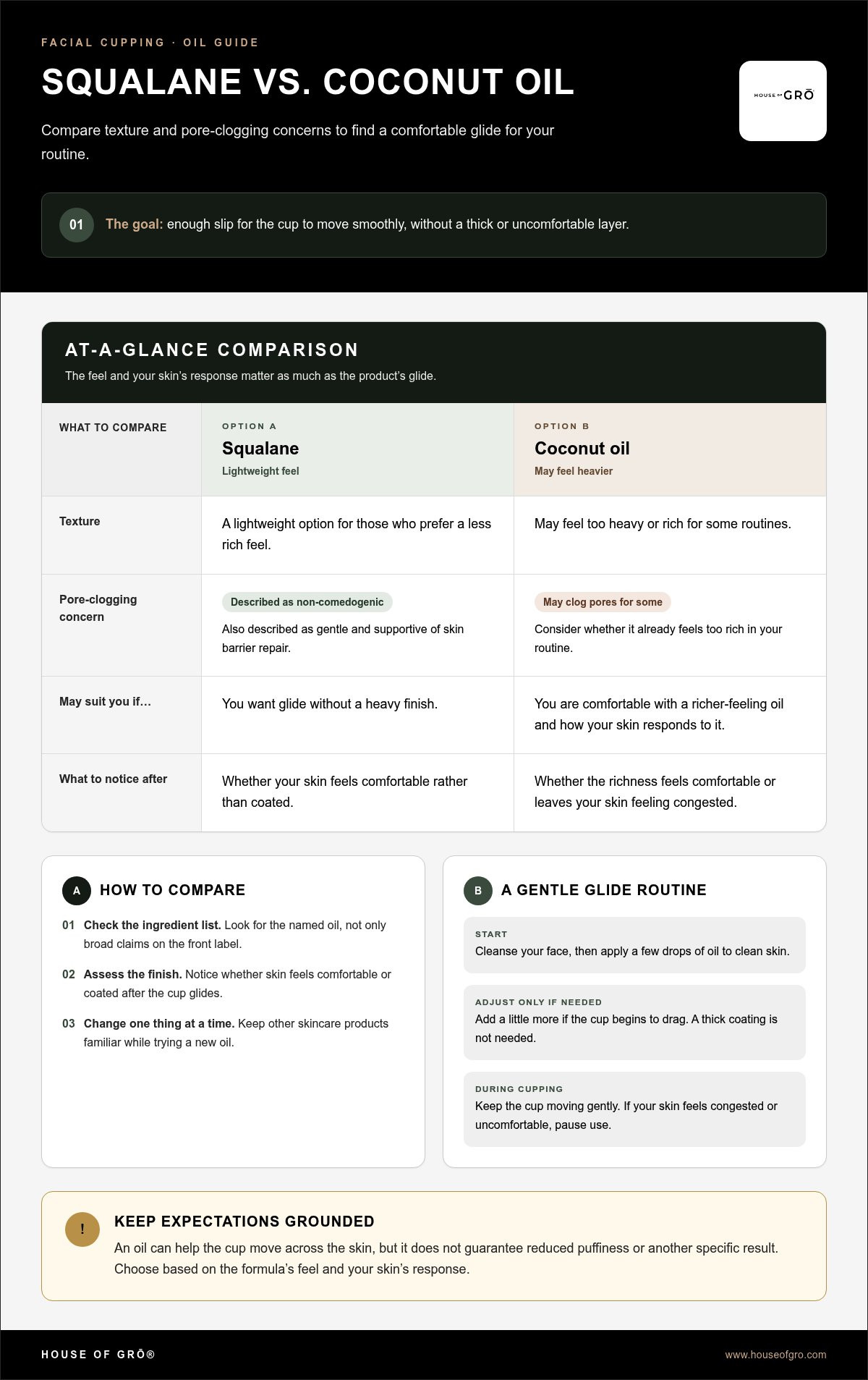
The best face oil for facial cupping gives the cup enough slip to glide over clean skin without pulling or dragging. Start with a few drops and add more only if needed. Lightweight squalane may suit those who prefer a less rich feel, while coconut oil can feel too heavy for some.
Choosing an oil or serum may seem like a small detail, but texture matters when a cup moves across delicate skin. Too little slip can tug at the skin, while a heavy formula may not suit your routine. The aim is a comfortable glide, not a thick layer.
This guide compares oils and serums for facial cupping, explains how to prepare and care for your skin, and covers pore-clogging concerns and possible side effects. You’ll also learn what to look for in a formula to keep your cupping practice thoughtful and gentle.
Key Takeaways
- Choose a lightweight oil or serum that gives the cup a smooth glide without feeling heavy on your skin.
- Compare ingredient texture and pore-clogging concerns before choosing a formula for your routine.
- Prepare clean skin with a light layer of lubricant, and keep the cup moving gently across the face.
- Learn how to clean your cup and adjust your skincare after cupping if your skin feels irritated.
Comedogenic oils and pore-clogging concerns
An oil’s feel during facial cupping matters, but so does how it feels on your skin afterward. A formula that provides glide may still feel too rich for your routine. “Comedogenic” describes an ingredient’s potential to contribute to clogged pores, but it doesn’t mean everyone will react the same way. Consider both the formula and your own skin’s response.
Squalane is described as a gentle, non-comedogenic oil that supports barrier repair. Its lightweight feel may suit those seeking glide without a heavy finish. Coconut oil, by contrast, may clog pores for some people. If it already feels too rich in your routine, it may not be your preferred choice for facial cupping.
To find the best face oil for facial cupping, match the formula to your skin’s needs and the cup’s movement. The oil should let the cup travel smoothly, without catching or pulling. A thick coating isn’t needed. Start with a small amount on clean skin, adding more only if the cup begins to drag. This also makes it easier to assess how the formula feels.
Use these practical checks when comparing oils:
- Consider texture: Squalane offers a lightweight option; coconut oil may feel heavier.
- Read the ingredient list: Look for the named oils, not just broad claims on the front label.
- Assess the finish: Notice whether your skin feels comfortable or coated after the cup glides.
- Change one thing at a time: Keep other skin care products familiar while trying a new oil.
Starting with one product at a time makes it easier to connect any change in your skin to a specific formula. If your face feels congested or uncomfortable, pause use. A different texture may suit your routine better. Aim for a controlled glide, not a lingering layer you dislike.
Facial cupping is sometimes paired with traditional massage practices or discussed alongside lymphatic drainage. Those terms don’t determine whether an oil will clog pores. Choose a lubricant based on its feel and your skin’s response. Oil can help a cup move across the skin, but it doesn’t guarantee reduced puffiness or another specific result.
Think of choosing an oil as one considered part of the ritual. Lightweight squalane may suit someone avoiding a rich finish; coconut oil may be less appealing if clogged pores are a concern. Whichever you choose, use a modest amount, keep the cup moving, and pay attention to your skin afterward. This comparison can help you refine your practice without unnecessary layers.
Facial cupping preparation and aftercare
Careful technique starts before the cup touches your face. Clean skin, enough slip, and gentle aftercare help make the process more comfortable for delicate skin.
Preparing for Facial Cupping
Prepare by cleansing your face, applying a light layer of facial oil, and using a clean cup. The oil lubricates the skin so the cup can move without pulling. Apply a few drops to clean skin and spread them over the areas you plan to treat. Add more only if the cup drags.
Before starting, check for irritation, breakouts, open wounds, or active acne flare-ups. Facial cupping may need to be avoided in these situations, as well as with rosacea or broken capillaries. If you’re pregnant or managing a chronic illness, consult a healthcare provider before beginning. After Botox or filler, wait four to six weeks before cupping.
Keep the setup simple:
- Cleanse your face and wash your hands.
- Apply a few drops of a lubricating, skin-friendly oil.
- Check that the cup is clean before it touches your face.
- Leave strong exfoliants and retinoids aside if your skin is already irritated.
Aftercare Following Facial Cupping
Aftercare includes cleaning the cup and giving your skin a calm interval after the session. Wash the facial cup after each use to remove product residue and keep it ready for your next practice. Your face may look rosy immediately afterward; one reported experience found that the flush faded in about an hour.
If irritation occurs, apply aloe vera gel or a gentle, fragrance-free moisturizer to soothe the skin. Avoid strong exfoliants and active ingredients such as retinoids for at least 24 hours after cupping when irritation is present. This pause helps prevent adding more stimulation to skin that already feels sensitive. Don’t treat redness as a reason to scrub or exfoliate.
Notice how your face feels as well as how it looks. If redness becomes irritation, pause cupping and keep your next steps gentle. Fine lines aren’t a reason to increase suction or use more forceful strokes. A delicate touch and comfortable glide matter more than chasing an immediate visible change.
For an evening skin care ritual, explore the AFTER DARK Restorative Night Serum as a serum option in your routine.
How facial cupping works
Facial cupping uses light suction to draw skin gently into a cup. The cup moves across the face rather than staying in one place. A session typically lasts 5-10 minutes. The technique depends on steady movement, light pressure, and enough facial oil for a smooth glide.
Facial cupping uses a gentler, face-friendly approach than body cupping. The cup creates suction against the skin, then travels across the treatment area. Keep it moving. In one reported experience, leaving a cup stationary on a cheek for a few seconds caused a faint red circle. This illustrates why continuous movement matters.
Direction is part of the method. Move the cup upward along the face, not downward, using light suction. Follow a controlled path rather than repeatedly pulling at one delicate area. The aim is measured technique, not strong pressure. If the cup catches or tugs, pause and add a little more facial oil before continuing.
Facial cupping tools vary in size and material. One reported set included two large cups and two small cups for different areas of the face. A silicone cup is one possible tool; whatever the material, the essential movement is the same. Keep the cup moving and suction light.
Consider these points during a session:
- Begin with cleansing: Clean skin gives the oil and cup a clear surface.
- Use lubrication: Apply a light layer of face oil so the cup can move smoothly.
- Stay in motion: Glide upward rather than holding suction on one spot.
- Keep the session brief: Facial cupping typically takes 5-10 minutes.
Start with short sessions once a week to assess how your skin responds. If comfortable, 1 to 2 facial cupping sessions per week is a reasonable frequency for most people. A pink appearance afterward can occur, but color alone doesn't show whether collagen production has changed. Treat temporary smoothness as an appearance change, not proof of a lasting result.
Facial cupping is sometimes discussed alongside massage, but its action is distinct: suction and movement across the skin. Don’t leave the cup fixed in place. A steady upward glide, a lubricated surface, and a brief session are the basic principles. Keep the focus on controlled movement rather than force.
Facial oil and serum options for cupping
Oils and serums differ in texture, finish, and how they help a cup glide. For facial cupping, compare how a formula feels under light suction, not just its ingredient name. Prices vary with formula and sourcing; a higher price alone doesn’t indicate whether a product will provide suitable glide.
Prickly pear seed oil offers one example of a distinct oil profile. It contains 60.5% linoleic acid and 20% oleic acid. Its seeds contain 5% oil, and producing a liter takes over 1 million seeds and 36 hours of labor. These details describe sourcing and composition, not how the oil will feel on every face. Apply a small amount and assess the glide before cupping.
Almond oil can also be used for facial cupping. Almond seed is 50% oil by composition, making it a useful contrast when comparing seed oils. Jojoba oil is described as balancing and gentle, with properties that mimic the skin’s natural oils. Rosehip oil is rich in essential fatty acids and vitamin A, and is associated with supporting skin tone and radiance.
- For a lightweight feel: Squalane offers hydration while feeling breathable.
- For a richer botanical profile: Rosehip and camellia oils bring different ingredient characteristics.
- For a serum texture: Hyaluronic acid is a lightweight humectant that attracts moisture to the skin’s surface.
Camellia oil is described as antioxidant-rich and associated with elasticity and calming the skin. Prickly pear seed oil is often discussed for its vitamin E content, with claims of 150% more vitamin E than argan oil. Treat composition and ingredient claims as comparison points. They don’t tell you whether a specific formula will feel comfortable during a cupping session.
Serums can feel different from oils. A humectant serum, such as one featuring hyaluronic acid, attracts surface moisture, while an oil can provide slip for moving cups. Some formulas combine oils such as jojoba, rosehip, camellia, and squalane. Check the ingredient list and consider whether the finished texture stays smooth as the cup moves.
Facial cupping may appear in routines inspired by traditional Chinese practices or lymphatic massage. The oil’s practical role is lubrication; it doesn’t create a powerful or guaranteed lymphatic effect. Choose based on texture, skin comfort, and how easily the cup glides. Start with a few drops and add more only if movement feels resistant.
What ingredients make a face oil suitable for facial cupping?
A suitable formula should let the cup glide and feel comfortable on your skin. Ingredient names offer a starting point, but the finished texture matters too. When choosing the best face oil for facial cupping, consider the whole formula rather than relying on one ingredient or a front-label claim.
Start with the ingredient list. Choose a facial oil or serum designed for skin, then consider how its texture behaves under a moving cup. A lightweight formula may feel different from a rich oil, even if both provide slip. Apply a small amount to clean skin and see whether the cup glides smoothly without dragging. Add only as needed.
Pay close attention to essential oils. They can irritate or damage skin, so a naturally scented formula isn’t automatically the gentlest choice. If a product contains essential oils, consider whether fragrance has caused discomfort in your routine. A simple formula can be easier to assess, with fewer ingredients to consider if your skin reacts or feels uncomfortable.
- Check the full list: Note oils, fragrance, and essential oils rather than relying on “natural” or “organic” on the label.
- Assess the texture: Choose a formula that provides glide without leaving a layer that feels unpleasant.
- Keep your routine steady: Avoid introducing several new products at once, so changes are easier to trace.
- Use only what you need: Begin with a small amount, then add more if the cup catches.
“Organic” describes a sourcing or production claim, not how a formula feels during cupping. Products with organic botanicals can still have different textures and ingredient combinations. Read the ingredient list and consider the finished product. A botanical oil may suit your preferences, while a serum may fit a routine that favors a lighter feel.
Hyaluronic acid is a humectant often used in serums, while face oils can provide the slip needed for cup movement. These formats aren’t interchangeable in every routine. If a serum absorbs quickly and the cup begins to drag, it may not provide enough surface glide on its own. Judge a formula by how it feels as you move the cup, not simply by its category.
Keep the choice personal and practical. If your skin is prone to discomfort, avoid essential oils and keep the formula uncomplicated. If pore congestion concerns you, consider the texture and your past experience with similar oils. A few drops can show whether the product lets the cup move smoothly. For a considered botanical approach to skin care, explore botanical skincare.
House of GRŌ®: AT DAWN Rejuvenating Daytime Oil
At Dawn Rejuvenating Daytime Oil is a botanical option to consider as you build a face-oil routine around facial cupping. House of GRŌ® describes its skincare as microbiome-friendly, with adaptogenic mushrooms and organic botanicals. Its formulas feature wild-harvested Chaga from Northern Maine as an antioxidant ingredient.
For cupping, the deciding factor is how a product feels on your skin and whether it allows comfortable movement. Read the ingredient list, apply a small amount, and notice whether the cup glides without pulling. At Dawn Rejuvenating Daytime Oil is designed for daytime use and may suit someone looking to include an oil in a daytime skincare ritual. Choose a texture that works for your skin.
Explore At Dawn Rejuvenating Daytime Oil on the House of GRŌ® website.
Make Your Next Step a Gentle One
Use your next cupping session to notice how your skin responds. Keep the routine simple, choose a texture you enjoy, and make thoughtful adjustments rather than layering several new products at once. The best face oil for facial cupping is one that gives you a comfortable glide and fits naturally into your skincare practice.
House of GRŌ® offers AT DAWN Rejuvenating Daytime Oil, AFTER DARK Restorative Night Serum, and TOUCH Hydrating Body Serum. Each has a distinct place in a personal care routine. For a closer look at the brand’s skincare offerings or to ask a question, contact House of GRŌ®.
Move at your own pace. A thoughtful ritual can begin with one small choice.
Frequently Asked Questions
How to use facial oil?
Apply facial oil to clean skin when you need a smooth surface for massage or facial cupping. Start with a few drops, spread them over the area, and add more only if your hands or tool begin to drag. For example, apply a light layer across your cheeks and jaw, then assess how your skin feels before adding other products.
Is facial cupping safe for all skin types?
No. Facial cupping may be unsuitable during active acne flare-ups or with rosacea, broken capillaries, or open wounds. Suction and repeated movement can further irritate vulnerable areas. If you’re pregnant or managing a chronic illness, consult a healthcare provider before trying it. A skin-type label alone doesn’t determine suitability; current irritation and skin conditions matter.
What Is Cupping?
Cupping uses a cup to create suction against the skin. In facial cupping, keep the cup moving across the face rather than holding it in one place. This differs from body cupping methods that leave cups in place for several minutes. Think of facial cupping as a moving tool in a skincare ritual, not a treatment that relies on strong suction.
Which face oils have the best reviews for facial cupping?
Reviews can help you compare texture and comfort, but a high product rating doesn’t prove that an oil works well with facial cups specifically. Look for comments about glide, residue, and how skin felt after use. For example, a review noting that an oil absorbs quickly may be useful context, since a fast-absorbing formula might need reapplication to maintain slip during cupping.
What is the best face oil for facial cupping for sensitive or acne-prone skin?
Squalane is one option for a lightweight feel, while coconut oil may clog pores for some people. If your skin is sensitive, avoid formulas containing essential oils, which can irritate or damage skin. Don’t cup over active acne, open wounds, rosacea, or broken capillaries. Focus on how a simple formula feels on your skin rather than assuming one ingredient suits everyone.
Can jojoba oil, squalane, or rosehip oil be used for facial cupping?
Yes, jojoba oil, squalane, and rosehip oil are options to consider for facial cupping. The finished formula matters as much as the ingredient: a blend may feel different from a single-ingredient oil. For example, if a serum absorbs before the cup finishes moving across your cheek, it may not provide enough glide. Test the texture on a small area first.
How much face oil should you apply before facial cupping?
Start with a few drops on clean skin, then spread a light layer over the area you plan to cup. Use enough for the cup to glide without pulling. If it catches along your jaw or cheek, add a little more there instead of heavily coating your entire face. This gradual approach helps you find the amount your chosen formula needs.
How do you use face oil with facial cupping safely and correctly?
Cleanse your face, apply enough skin-friendly oil for glide, and use light suction while continuously moving the cup upward. Avoid cupping over active acne, rosacea, broken capillaries, or open wounds. Wash the cup after each use. If irritation develops, avoid strong exfoliants and retinoids for at least 24 hours afterward, and use aloe vera gel or a gentle, fragrance-free moisturizer.