


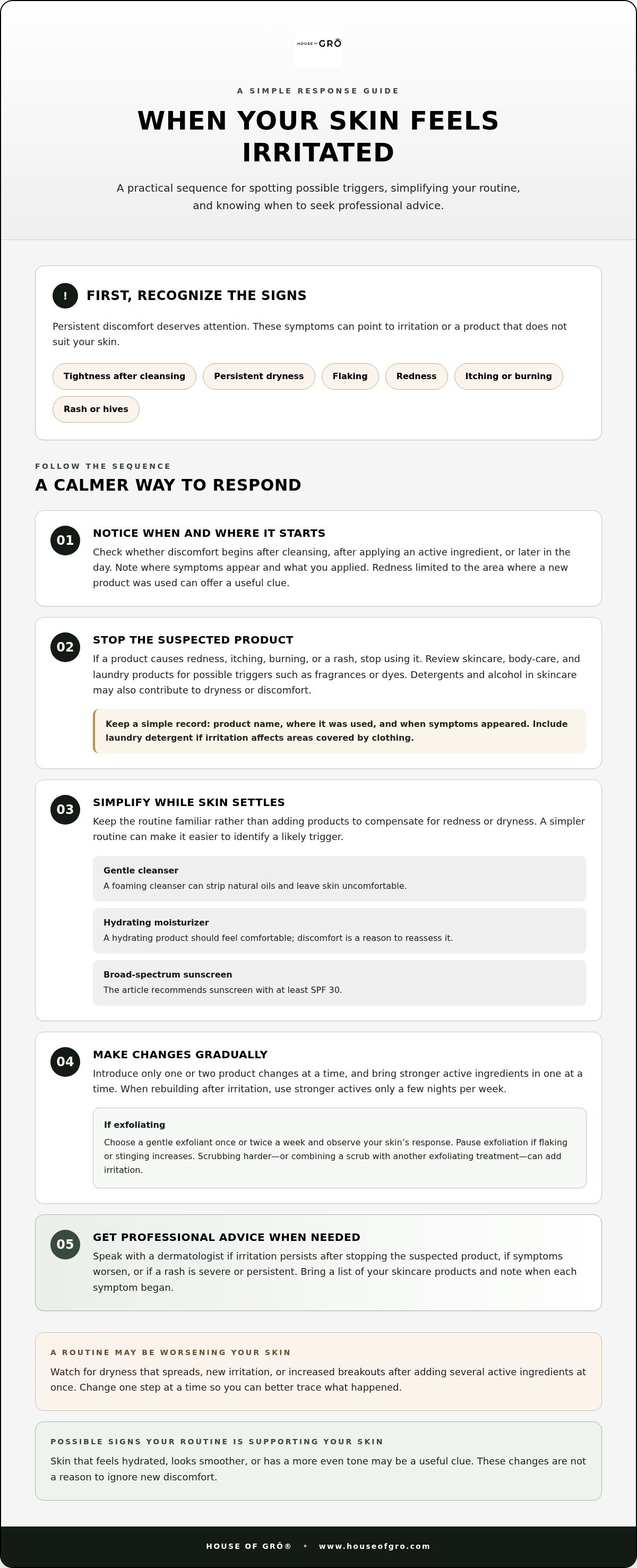
A tight, dry feeling after skincare isn’t always a sign that your routine is working. Persistent dryness, flaking, burning, itching, redness, or a rash can be signs your skincare is not working, and may point to irritation or a product that doesn’t suit your skin. If a product triggers these symptoms, stop using it and consider speaking with a dermatologist, especially if the rash is severe or persistent.
It’s easy to assume discomfort means a product is active or that your skin needs time to adjust. But ongoing irritation deserves attention, not just patience.
Here, you’ll learn what dryness and tightness may signal, how to recognize possible irritation or an allergic reaction, and what to simplify when your skin feels unsettled. You’ll also find out when it’s time to consult a dermatologist and which signs can suggest your routine is helping instead.
Key Takeaways
- Notice when dryness, tightness, or flaking begins, and consider whether a cleanser or other product may be leaving your skin uncomfortable.
- Review products and laundry detergents for fragrances or dyes if your skin is sensitive or easily irritated.
- Stop using a product that causes redness, itching, burning, or a rash; persistent or severe symptoms warrant a dermatologist’s advice.
- Simplify your routine and introduce new products gradually so you can better recognize what your skin responds to.
- Learn how to tell temporary discomfort from signs that your routine needs a gentler approach.
1. Dryness, tightness, flaking, and the skin barrier
Common signs your skincare is not working include tightness after cleansing, flaky patches, and dryness that persists after moisturizing. A foaming cleanser, for example, can strip natural oils and leave skin uncomfortable. Dryness may also reflect weather, a skin condition, or products that don’t suit your skin type. Notice when the discomfort starts: after cleansing, applying an active ingredient, or throughout the day.
When the skin barrier feels unsettled, simplify your care routine. Use a gentle cleanser, a hydrating moisturizer, and broad-spectrum sunscreen with at least SPF 30. Check whether cleansers or treatments contain detergents or alcohol that may over-dry your skin. Introduce only one or two product changes at a time. This makes it easier to notice whether a new step is helping or worsening dryness, flaking, or clogged pores.
Stop using a product if it causes redness, itching, burning, or a rash. If irritation persists or a rash is severe, speak with a dermatologist rather than continuing to test the product on your skin.
No single ingredient-pairing rule applies to every skin type. Follow product directions, avoid layering active ingredients that irritate your skin, and introduce stronger actives one at a time. When rebuilding your routine after irritation, use stronger actives only a few nights per week.
Dullness, uneven tone, and rough texture can sometimes accompany dead skin buildup. Gentle exfoliation may help lift surface cells, but scrubbing harder can add irritation when skin is already dry or tight. Try a gentle exfoliant once or twice a week, then observe how your skin responds. If flaking or stinging increases, pause exfoliation and return to a simpler routine.
Your routine may be worsening your skin if dryness spreads, new irritation appears, or breakouts increase after you add several active ingredients at once. Change one step at a time and track what you applied before symptoms began. Skin that feels hydrated, looks smoother, or has a more even tone may suggest your routine is supporting it. These changes are useful clues, not a reason to ignore new discomfort.
Seek professional skincare advice if irritation doesn’t settle after you stop the suspected product, or if a rash is severe or persistent. A dermatologist can assess your symptoms and help identify whether a product, skin condition, or another factor may be involved. If you’re unsure what’s behind ongoing dryness or flaking, bring a list of your skincare products and note when each symptom began.
2. Fragrances and dyes as potential irritants
A product can feel pleasant and still leave sensitive skin uncomfortable. Fragrances and dyes in personal care products or laundry detergents can trouble people with very sensitive skin. For example, redness may appear where you applied a scented moisturizer, or irritation may follow wearing a freshly washed shirt. The timing and location of symptoms can offer useful clues about which exposure to review.
Read ingredient labels on skincare, body products, and detergent. If a reaction starts after you add a scented lotion, pause that product and note when the redness or discomfort began. Then consider other recent changes, such as a new laundry detergent or cleanser. Changing several products at once makes it harder to identify a likely trigger.
Choose products formulated for sensitive skin and avoid potential irritants such as alcohol, fragrances, and harsh preservatives. A shorter routine can also make product reactions easier to trace. Keep your steps familiar while irritation settles, rather than adding a new serum or exfoliant to compensate for redness. A hydrating product should feel comfortable on your skin; discomfort is a reason to reassess its ingredients.
Over-exfoliation can compound the problem. Using a scrub and an exfoliating treatment together, for example, may leave skin feeling raw or more reactive. If you exfoliate, choose a gentle option once or twice a week, then watch for changes. Pause exfoliation if redness, burning, or flaking increases. Scrubbing more often won’t necessarily clear breakouts and can make an already irritated routine harder to tolerate.
Redness that returns after each application, or irritation that lingers after you stop a product, deserves attention. The American Academy of Allergy, Asthma & Immunology notes that a rash, itchiness, or hives may indicate irritation or an allergic reaction to skincare. Stop using a product if you notice these symptoms. Speak with a dermatologist if the reaction persists, worsens, or includes a severe rash.
Keep a simple record: the product name, where you applied it, and when symptoms appeared. Include laundry detergent if irritation affects areas covered by clothing. This can help you spot patterns without changing your entire routine at once. If your skin is settled and you’re choosing a body hydration step, TOUCH Hydrating Body Serum may be one option to consider; introduce any new product thoughtfully and observe your skin’s response.
3. Rashes, itchiness, and allergic reactions
Redness, itching, burning, and a rash are signs of skin irritation. A rash, itchiness, or hives after using a skincare product may indicate irritation or an allergic reaction, according to the American Academy of Allergy, Asthma & Immunology. Notice when symptoms begin and where they appear. For example, redness limited to areas where you applied a new cream gives you a useful clue.
To assess whether a product is causing irritation or an allergic reaction, stop using it when symptoms appear and note the timing, location, and product applied. Keep the rest of your routine steady as you observe your skin. If the reaction persists or worsens, speak with a dermatologist. This helps avoid adding more products while your skin is already uncomfortable.
Products that are too aggressive or unsuitable for your skin type can cause irritation. A strong active ingredient may leave redness or burning after application, while a product that felt comfortable at first may become uncomfortable as your routine changes. Review recently added products and their ingredients. Avoid restarting a product that caused a clear reaction just to see whether symptoms return.
Changes in itchiness can also offer a useful comparison over time. Skin that itches less often may be a sign of healthier skin. Notice whether the change follows a simpler care routine, or whether itching continues after you stop using a particular product. Record the product name, where you used it, and the symptoms. These details can help a dermatologist understand the pattern.
Keep your skincare gentle while irritation is present. Avoid adding several active ingredients or exfoliating treatments at once, since that makes it harder to identify the trigger. Choose products formulated for sensitive skin and review labels for ingredients that have caused problems before. If a cleanser or moisturizer stings, stop using it rather than layering another product over the discomfort.
Hives or a spreading rash need more attention than a brief, mild sensation after application. Stop using the suspected product and consult a dermatologist if symptoms persist, worsen, or return. A board-certified dermatologist can assess ongoing skin concerns and recommend a suitable next step. Seek professional advice when the cause remains unclear, especially if several products or areas of the body are involved.
4. When to consult a dermatologist
Consult a board-certified dermatologist if a rash is severe or persistent, irritation keeps returning, or you’re unsure what’s causing a change. Redness, burning, itching, and swelling after using a product can help describe the problem. Don’t keep applying a product that triggers irritation while waiting for an appointment. A dermatologist can assess your symptoms, skin type, and care routine, then offer personalized advice based on what they see.
Timing matters when you’re judging ordinary results. Many new skincare products need 4-6 weeks of consistent use to show noticeable improvement, while a routine may need six to eight weeks before you assess whether it’s working. Those periods aren’t a reason to tolerate worsening symptoms. Stop using a product that causes irritation, and seek advice for a severe or persistent rash. If your concern is simply a lack of improvement, note how long you’ve used each product and whether you’ve followed its directions consistently.
Before an appointment, write down when your skin changed and which products you were using. Bring the names or ingredient lists for your cleanser, moisturizer, sunscreen, and active ingredients. Note examples such as tightness after washing, itching after applying a serum, or breakouts after a routine change. These details help a dermatologist consider whether a product, skin condition, or another factor may be involved.
A dermatologist can also help refine a routine when dryness, oiliness, or sensitivity makes product choices difficult. The research-backed recommendations in this article include checking whether products contain hyaluronic acid, glycerin, or ceramides to help retain moisture. But a useful ingredient doesn’t automatically make every formula suitable for every person. A physician can assess your Baumann Skin Type and recommend products suited to your skin’s concerns, rather than asking you to guess based on a label.
Seek professional guidance when several weeks of consistent use bring no improvement, or when your skin feels worse instead of better. Describe the outcome you hoped for, such as less dryness or fewer breakouts, and the changes you’ve noticed. A dermatologist or skincare expert can help distinguish an unsuitable product from a concern that needs diagnosis. Bring a simple product list and symptom timeline; clear examples make the conversation more useful and support a personalized plan.
5. Dryness and tightness after applying skincare
Pay attention to when tightness begins. Skin that feels dry immediately after a foaming cleanser points to a different step than discomfort after applying a serum. Note the product, application area, and timing. For example, if your cheeks feel tight after cleansing but your forehead feels comfortable, compare how each area responds. A short record can reveal whether one product or your whole routine is contributing to discomfort.
Layering can make the cause harder to identify. If you introduce a cleanser, exfoliant, and serum together, you can’t easily tell which step leaves your skin feeling dry. Simplify your routine and change one or two products at a time. Follow each product’s directions, and avoid adding another active treatment to offset tightness. If a product causes irritation, stop using it rather than continuing to test it.
Consider how your skin feels as well as how it looks. Tightness, flaking, and persistent dryness suggest your care products aren’t leaving skin comfortable. A heavy moisturizer with oils or other occlusive ingredients can feel greasy, especially on skin that isn’t usually oily. Dry or oily skin can also respond to severe weather, diet, or an underlying skin condition. Consider these factors when deciding whether you chose the wrong products.
When your skin feels unsettled, return to a simple routine: a gentle cleanser, a hydrating moisturizer, and mineral sunscreen. Check labels for detergents or alcohol that can over-dry skin. Avoid exfoliating while your face feels raw or tight. Once your skin feels comfortable, introduce stronger active ingredients one at a time, only a few nights per week. This gradual approach makes it easier to spot which treatment your skin tolerates.
Don’t confuse the time needed for visible results with permission to endure discomfort. Most new skincare products need 4-6 weeks of consistent use to show noticeable improvement. A routine may need six to eight weeks before you judge its results. But burning, worsening dryness, or a rash calls for stopping the suspected product, not waiting out that timeline. For severe or persistent symptoms, consult a dermatologist.
Once skin feels comfortable, assess whether a product suits its purpose and your routine. A night serum can be a considered step, not a remedy for ongoing irritation. If you’re ready to explore an option for evening skincare, discover AFTER DARK Restorative Night Serum. Introduce it as a single change, follow its directions, and observe how your skin responds.
House of GRŌ®: AT DAWN Rejuvenating Daytime Oil
AT DAWN Rejuvenating Daytime Oil can be a considered daytime step once your skin feels comfortable and your routine is settled. House of GRŌ® creates skincare with adaptogenic mushrooms and organic botanicals, including wild-harvested Chaga as an antioxidant ingredient. The oil is an option for readers seeking a botanical addition to their morning care ritual, not a treatment for active irritation or a persistent rash.
If your skin is reacting, pause the suspected trigger and follow a dermatologist’s advice before adding new products. When you’re ready to explore a daytime oil, introduce it thoughtfully and observe how your skin responds. For questions about AT DAWN Rejuvenating Daytime Oil, contact House of GRŌ®.
Make your next skincare step a thoughtful one
Recognizing signs your skincare is not working can help you make a calmer, more deliberate choice about what comes next. Rather than adding another treatment immediately, take time to notice what feels comfortable, what doesn’t, and what you want your routine to support. If irritation continues, a dermatologist can help guide your decisions about your skin.
For a botanical addition to your care ritual, House of GRŌ® offers AT DAWN Rejuvenating Daytime Oil, AFTER DARK Restorative Night Serum, and TOUCH Hydrating Body Serum. Choose a product that fits the moment you want to create, and introduce it with care.
Contact House of GRŌ® for skincare support and explore a more intentional approach to your routine. A gentle next step is still progress.
Frequently Asked Questions
Is Your Skincare Routine Working?
A routine is likely helping when the concern you’re treating gradually improves without causing new discomfort. For example, if you’re targeting dryness, notice whether your skin feels more comfortable between cleansing and moisturizing. Track the specific goal you chose, rather than judging every pore or mark each day. If your skin becomes more irritated or the concern isn’t improving with consistent use, reassess the products and how you use them.
What are signs a skincare routine is not working?
Persistent discomfort, worsening dryness, new irritation, or breakouts that increase after introducing products can suggest your routine needs attention. These signs your skincare is not working matter most when they repeatedly follow the same step. Record the product, application time, and skin change you notice. A single day’s fluctuation may not show a pattern, but repeated symptoms after using one product give you a clearer reason to pause and reassess.
How long should skincare products take to show results?
Most new skincare products may need 4-6 weeks of consistent use to show noticeable improvement. Give a routine six to eight weeks before judging its overall effect, unless irritation develops. The time also depends on the concern: a moisturizer may change how dry skin feels sooner than a product targeting uneven tone. Keep other routine steps stable during the observation period, so you can better connect changes with the product you introduced.
What are signs of a damaged skin barrier from skincare?
A disrupted barrier may show up as skin that feels unusually dry, tight, flaky, or reactive after products it previously tolerated. For example, a familiar cleanser may suddenly leave your cheeks uncomfortable, while moisturizer stings. Pause exfoliating treatments and simplify your routine as you observe the change. If symptoms continue, worsen, or include a persistent rash, consult a dermatologist to assess what may be affecting your skin.
How do you know if acne products are making breakouts worse?
Notice whether breakouts increase after adding an acne treatment, especially alongside dryness, redness, or burning. Harsh skincare ingredients can trigger increased oil production and contribute to more breakouts. A temporary increase can also occur when introducing a product rich in active ingredients. Keep a record of when you started the treatment and where blemishes appear. If irritation accompanies worsening acne, stop using the product and seek dermatology advice.
How can you tell whether a skincare routine is ineffective or just needs more time?
Compare your results with the product’s purpose and the time you’ve used it consistently. Most new products may take 4-6 weeks for noticeable improvement, and judging a routine can take six to eight weeks. If the concern is unchanged after that period, review the routine and whether the product targets that concern. If irritation or a rash develops, don’t wait for a results window to pass before stopping the suspected product.
When should you see a dermatologist about a skincare reaction or lack of results?
See a dermatologist for a severe or persistent rash, recurring irritation, or uncertainty about what’s causing a skin change. A board-certified dermatologist can assess symptoms and help distinguish a product reaction from another skin concern. If your routine simply isn’t improving the issue after several weeks, bring a list of products and note how consistently you used them. That context can support a more personalized discussion of next steps.
How can you track whether skincare products are improving your skin?
Keep a simple log with the product name, start date, application frequency, and the concern you want to address. Note changes in comfort, breakouts, texture, or tone, rather than relying only on memory. If you take progress photos, use similar lighting and angles each time; different conditions can make skin appear different. Change one or two products at a time so you can connect a shift with a specific routine change.