


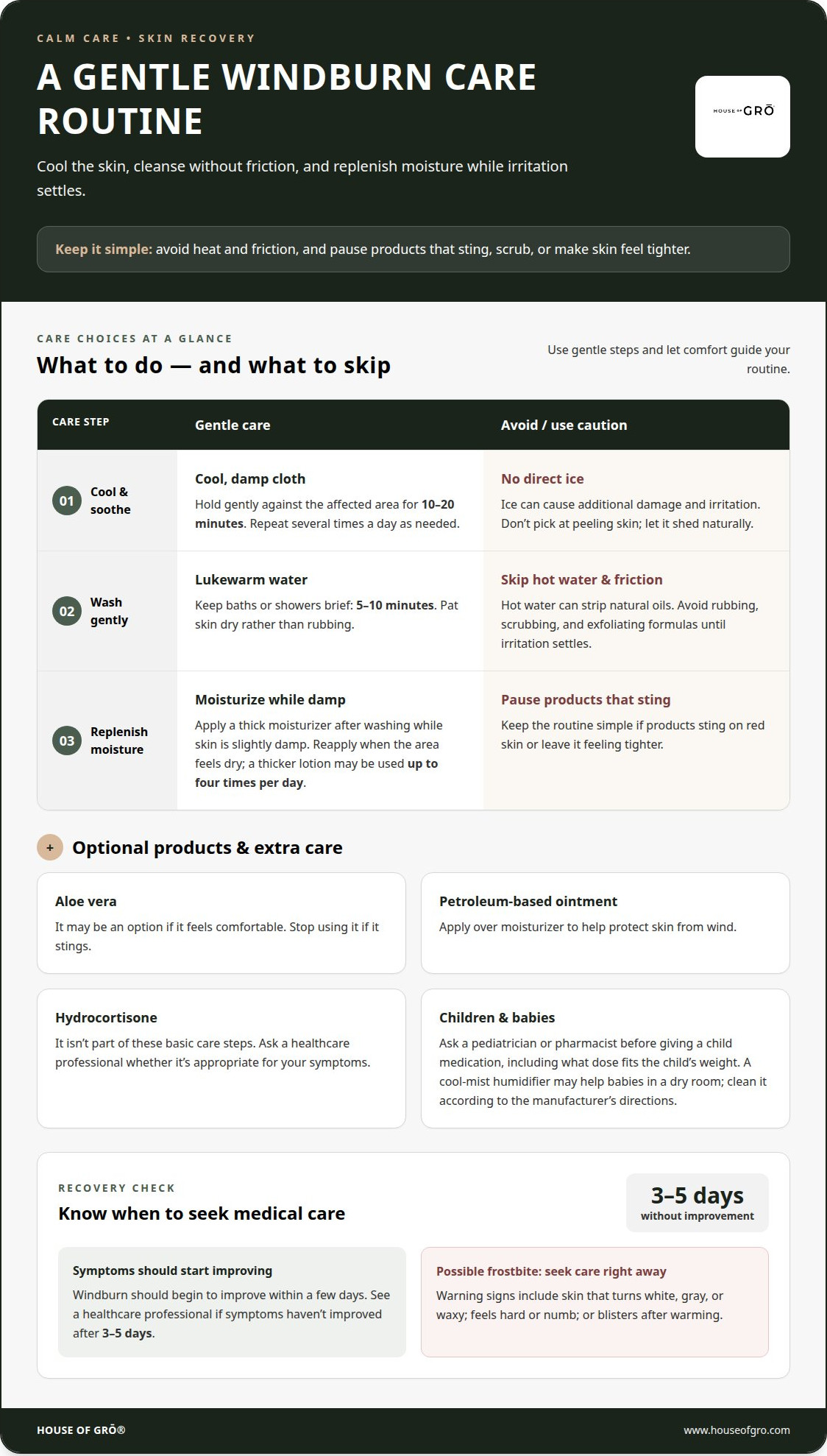
More heat can leave windburned skin feeling worse. To treat windburned skin, soothe it with a cool, damp cloth for 10 to 20 minutes, wash gently with lukewarm water, then apply a thick moisturizer while the skin is slightly damp. Skip direct ice, hot water, and picking at peeling skin.
Redness, tightness, dryness, and stinging can be uncomfortable, especially when your skin already feels depleted. A calm routine can ease irritation and replenish moisture as your skin recovers. Windburn symptoms can overlap with sunburn, so it helps to understand the difference.
Learn how to soothe irritated skin, protect it from further wind and sun exposure, and recognize when symptoms may need medical attention. Small, gentle choices can help your skin feel more comfortable as it heals.
Key Takeaways
- Learn why cold, dry air can leave skin feeling tight, rough, and irritated.
- Understand how wind and ultraviolet exposure can affect skin at the same time.
- Recognize signs that may help distinguish windburn from sunburn.
- Explore ways to restore moisture and protect vulnerable skin during recovery.
- Know which changes in symptoms can signal a need for medical attention.
How do you treat windburn?
Knowing how to treat windburned skin starts with cooling the area, cleansing gently, and applying moisturizer. Cold, dry, windy air can leave exposed skin feeling tight, rough, and irritated.
Wind and dry air can draw moisture from the skin’s surface, leaving it uncomfortable and more vulnerable to irritation. Redness, stinging, and flaky patches may follow, especially on exposed areas such as the cheeks and nose. To treat windburned skin, first avoid heat and friction while it recovers.
Gentle Bathing and Skincare
Keep bathing brief and mild: use lukewarm water and limit baths or showers to 5-10 minutes. Hot water can strip natural oils and further compromise the moisture barrier. After washing, pat skin dry rather than rubbing. Pause products that sting, scrub, or leave skin feeling tighter, including exfoliating formulas, until irritation settles.
Soothing Redness and Irritation
A cool, damp cloth can soothe stinging and redness without the harsh chill of direct ice. Hold it gently against the affected area for 10 to 20 minutes, and repeat several times a day as needed. Never place ice directly on windburned skin; it can cause additional damage and irritation. Leave peeling skin alone to shed naturally.
Moisturizing Irritated Skin
Moisturizer can replenish comfort after cleansing and ease dryness and tightness. While your skin is still slightly damp, apply a thick moisturizer, then reapply when the area feels dry. A thicker lotion may be used up to four times per day while your skin recovers. Keep your routine simple if products sting on red skin.
Aloe Vera, Petroleum Jelly, and Hydrocortisone
Aloe vera may be an option if it feels comfortable; stop using it if it stings. You can apply a petroleum-based ointment over moisturizer to help protect skin from wind. Hydrocortisone isn’t part of these basic care steps, so ask a healthcare professional whether it’s appropriate for your symptoms.
For a child’s discomfort, ask a pediatrician or pharmacist whether pain relief is appropriate and what dose fits the child’s weight. Check with a healthcare professional before giving a child any medication. For babies, a cool-mist humidifier in a dry room may help. Clean it according to the manufacturer’s directions.
Windburn should start improving within a few days. See a healthcare professional if symptoms haven’t improved after 3 to 5 days. Seek medical care right away if frostbite is suspected. Warning signs include skin that turns white, gray, or waxy, feels hard or numb, or blisters after warming.
How do you prevent windburn?
Protect skin from both moving air and ultraviolet exposure. Before going outdoors, moisturize, cover exposed areas, and apply broad-spectrum sunscreen with at least SPF 30.
Wind Exposure and UV Damage
Wind and ultraviolet rays can affect skin at the same time, so wind protection alone isn’t enough. Wind by itself doesn’t cause windburn symptoms; skin changes occur when ultraviolet light is also present. Even on cloudy days, sunlight can reach exposed skin, and snow or ice can reflect up to 80% of ultraviolet rays. That reflection makes winter outings a reason to keep sun protection in your routine.
Apply broad-spectrum sunscreen with a minimum SPF of 30 to exposed skin before heading out. Reapply every two hours as needed, especially during longer outdoor activities. For lips, choose balm with SPF 15. Snow, ice, and water can reflect sunlight onto the face, so include the nose, cheeks, and lips rather than protecting only areas that feel directly exposed.
Moisture support matters before wind reaches the skin. Apply a thick, fragrance-free cream or ointment to exposed areas 15 to 30 minutes before going outdoors. This creates a protective layer while sunscreen addresses UV exposure. Exposed skin can begin drying and cracking after as little as 15 minutes in windy conditions, so prepare before leaving rather than waiting for tightness.
Reducing Wind Exposure and Chafing
Covering exposed skin limits direct wind contact and rubbing from clothing. Choose long sleeves, pants, gloves, a windbreaker, sunglasses, and a securely fitting hat. For a cold-weather walk, a scarf or neck gaiter over the nose and chin can shield vulnerable facial skin. Comfortable coverage helps limit wind exposure and friction from movement.
Pay special attention to the face, lips, and hands, which often remain exposed outdoors. A hat that covers the ears, gloves, and a scarf add practical protection when the wind picks up. Use sunscreen on uncovered areas too: clothing and sun protection address different kinds of exposure.
Limiting Time in Windy Conditions
Spend less time outdoors when strong wind makes your skin feel dry or uncomfortable. Take shelter during extended activities, then head back out when conditions feel more manageable. This can help during a walk, winter sport, or time near open water, where wind and reflected UV rays may affect exposed skin together.
Maintain sunscreen protection throughout the day, reapplying every two hours as needed. If you’ll be outdoors for a long stretch, plan indoor breaks and cover exposed areas again before heading back out. Cloudy skies don’t eliminate the need for protection, especially around snow, ice, or water.
How does windburn differ from sunburn?
“Windburn” describes irritated skin after exposure to cold, dry, windy weather, but the name can obscure two causes. Wind can dry and aggravate exposed skin, while ultraviolet rays can also contribute to skin changes. Skin experts have debated the distinction between windburn and sunburn for nearly a century. Both can occur together, including during winter outings.
Redness alone doesn’t reveal which exposure affected your skin. Windburn can cause tightness, dryness, roughness, stinging, or burning, often on exposed areas such as the cheeks and nose. Sunburn also causes redness and discomfort after ultraviolet exposure. Because the signs overlap, a red face after windy weather doesn’t prove that wind alone caused the irritation.
Consider the setting as well as the sensation. A long walk on a cold, windy day can expose your skin to dry air and UV rays at once. Cloudy weather doesn’t eliminate sunlight exposure, and snow or ice can reflect UV rays toward your face. Sunburn can happen in winter, even when the air feels cold rather than hot.
The practical difference is which exposure you need to address. Covering skin can reduce direct wind contact, while broad-spectrum sunscreen protects against ultraviolet exposure. If both conditions occur together, a scarf alone leaves UV exposure unaddressed. Sunscreen, in turn, doesn’t shield skin from cold, dry air across exposed cheeks. Use protection suited to both conditions.
Windburn symptoms can include flaky or peeling skin a day or two later; redness often fades after a few days. Peeling doesn’t reveal whether the original irritation came from wind, UV rays, or both. Don’t pull flakes away, since that adds friction to already irritated skin. A simple routine of gentle cleansing and moisturizer keeps care consistent.
Fragrance-free products can be a sensible choice while irritated skin feels reactive, especially if a product stings on contact. Keep sunscreen in the routine when daylight exposure continues, including on cloudy winter days. If redness is severe, symptoms worsen, or the skin doesn’t improve after 3 to 5 days, seek advice from a healthcare professional. Look at the full picture: weather, outdoor exposure, and symptoms together.
Rinse windburned skin with lukewarm water rather than hot water, which can dry it out further. Lip balm with SPF 15 is recommended for the lips. Urocanic acid in the outer skin layer provides a natural sunscreen with an SPF of 1.5, but this does not replace protection from clothing or sunscreen.
Children can experience windburn and sunburn together because sunlight reaches them on cold or cloudy days, and snow and water reflect sunlight onto the face. Snow, ice, and water can reflect UV rays, so sun protection remains important during outdoor activities. A hat covering the ears, a scarf or neck gaiter over the nose and chin, and gloves help protect children from windburn.
Windburn symptoms
Windburn can leave exposed skin red, tight, dry, rough, or tender. Stinging and burning may also occur, especially across the cheeks, nose, and lips after windy weather. These symptoms reflect irritation after harsh exposure, including cold, dry air. They can make familiar routines, such as washing your face or putting on clothes, uncomfortable.
Symptoms may become more noticeable once you’re indoors. Your skin may feel unusually taut when you smile or sting when water touches it. Lips may become chapped, while cheeks feel rough rather than smooth. Flaking or peeling can appear a day or two later. These signs indicate irritation, but they don’t identify the cause on their own.
Windburn redness often fades after a few days, and skin may peel afterward. Discomfort and swelling are likely to ease after a couple of days during recovery. Windburn typically lasts 1-3 days. Very dry or sensitive skin may take up to a week to recover, especially without hydration and protection. Changes vary with skin sensitivity and ongoing exposure.
Look at where symptoms appear and what happened beforehand. Redness across exposed cheeks after time outdoors in cold, windy weather may fit wind-related irritation. Tightness and dryness can occur alongside redness, not just after it. The same exposed area may also receive ultraviolet light, so symptoms alone cannot reliably distinguish windburn from sunburn.
Children may develop symptoms on their cheeks, noses, and lips. Their skin is thinner than adult skin and loses moisture quickly, making these areas particularly vulnerable in windy conditions. Discomfort may show as chapped lips, red cheeks, or reluctance to have the affected area touched. Notice whether symptoms settle after exposure ends.
Watch whether your skin is improving or changing. Redness that fades over a few days, followed by mild flaking, can occur during recovery. Don’t pull or scrub peeling skin; let it shed on its own to avoid further irritation. Avoid rough clothing or towels against tender areas. Gentle handling lets you observe the skin without adding discomfort.
Seek medical advice if symptoms haven’t improved after 3 to 5 days. Get prompt medical care if frostbite may be involved. Warning signs include skin that turns white, gray, or waxy, feels hard or numb, or blisters after warming. Those changes differ from ordinary dryness or redness and need urgent attention. Tracking the timing, affected areas, and symptom changes can help explain what you’re seeing.
Rehydrating windburned skin
Rehydration means easing moisture loss while keeping care gentle. Cold, dry air and continued exposure can leave skin feeling tight after you come inside. A simple routine helps avoid friction and irritating products while the surface recovers. Focus on consistency, not a crowded shelf of new formulas.
Start after washing, while your skin is slightly damp. Smooth on a thick moisturizer, then reapply throughout the day whenever the area feels dry. This is a useful step in treating windburned skin because it can restore comfort after cleansing. Choose a product that feels comfortable, and stop using it if it stings or worsens irritation.
Pay attention to your skin’s response instead of automatically adding more layers. If your cheeks feel tight again after time outside, apply moisturizer when you return indoors. Avoid scrubbing flaky patches or pulling peeling skin; friction can aggravate tender areas. Use a soft towel, pat skin dry, and let peeling shed naturally.
Indoor air can contribute to dryness, especially in a child’s room at night. If the air is dry, a cool-mist humidifier may add moisture to the room. Clean it according to the manufacturer’s directions. A humidifier adds moisture to the air, while moisturizer addresses the skin directly. Neither replaces protection from wind outdoors.
To protect your skin during recovery, limit renewed exposure. Cover vulnerable areas with clothing, and use sunscreen on exposed skin when UV exposure is possible. If you spend time outside, reapply moisturizer when skin feels dry after returning indoors. This steady rhythm is another practical part of how to treat windburned skin without overcomplicating care.
For wind-exposed body areas, explore TOUCH Hydrating Body Serum as part of a moisture-focused routine. Keep the rest of your care simple, especially while skin feels sensitive. The key is consistency: gentle cleansing, moisturizer on slightly damp skin, and less exposure to drying conditions. Seek medical advice if symptoms persist beyond the expected recovery period.
House of GRŌ®
House of GRŌ® offers skincare to complement a considered daily routine alongside the basic care windburn requires. Keep the focus on gentle cleansing, moisturizer, and protection from further exposure. Skincare products don’t replace medical care when symptoms persist or worsen.
For your ongoing routine, At Dawn Rejuvenating Daytime Oil and After Dark Restorative Night Serum offer daytime and nighttime options. Touch Hydrating Body Serum is a body-care option, while Eye Detox Brightening Oil is intended for the eye area. Consider your skin’s comfort, and avoid applying any product that stings or aggravates irritation.
Explore House of GRŌ® skincare to build a routine that feels right for your skin.
Carry a Gentler Routine Forward
As your skin settles, let comfort guide your return to familiar products and outdoor routines. Reintroduce skincare gradually and pay attention to how your skin responds. If a product stings or worsens irritation, pause it and keep care simple. A measured approach gives sensitive skin fewer new variables as it recovers.
Knowing how to treat windburned skin can also shape the habits you take into the next cold, windy day. Make protection and moisture part of getting ready, not just a response to redness. Choose a routine that feels calm and manageable, and seek medical advice if symptoms persist or cause concern.
For a thoughtful skincare routine, connect with House of GRŌ®. Let your next steps stay gentle, considered, and centered on what your skin needs.
Frequently Asked Questions
What Is Windburn and How Can I Get Relief?
Windburn is skin irritation after exposure to harsh conditions, including cold, dry, windy air; ultraviolet light can also contribute. For relief, move out of the wind, cool the area with a damp cloth, and apply moisturizer. After coming in from a ski slope or windy walk, avoid rubbing your face with a towel. Gentle handling helps prevent further friction on tender skin.
What are the symptoms?
Common signs include redness, tightness, dryness, roughness, and stinging or burning. Lips may become chapped, and flaky or peeling skin can follow a day or two later. For example, your cheeks may feel taut when you smile, while your nose feels rough to the touch. These symptoms can overlap with sunburn, so the location and timing of outdoor exposure matter too.
What causes this?
Windburn symptoms can follow exposure to cold, dry, windy air, which can leave exposed skin dry and irritated. Ultraviolet light may also be involved, so wind isn’t necessarily the only cause. A winter walk on a bright, windy day combines both exposures; clouds don’t eliminate UV exposure. Snow and ice can reflect sunlight toward your face, adding another reason exposed skin may become red or sore.
Can windburn make you feel sick?
Windburn mainly affects the skin, causing local redness, dryness, tightness, or stinging rather than explaining a general feeling of illness. If you feel unwell after time outside, consider the full situation, including cold exposure, sun exposure, or another cause. Skin that becomes numb, hard, white, gray, or waxy needs prompt medical attention, especially if blisters appear after warming.
Feeling the Burn?
Burning or stinging can be a sign of wind-irritated skin. Stop applying anything that worsens the sensation, and avoid rubbing or scratching the area. A cool, damp cloth may offer comfort; direct ice can injure irritated skin. If the sensation is severe, worsening, or accompanied by unusual skin changes, seek medical advice rather than relying on skincare alone.
How long will it take to heal?
Windburn typically lasts 1-3 days, though very dry or sensitive skin may take up to a week to recover without adequate hydration and protection. Redness can fade over a few days, with some peeling afterward. During recovery, watch whether discomfort is easing rather than repeatedly testing the skin with new products. If symptoms haven’t improved after 3 to 5 days, see a healthcare professional.
What are the symptoms of windburned skin?
Windburned skin can look red and feel dry, tight, rough, or tender. Stinging, burning, chapped lips, and later flaking or peeling may also occur. The face is a common place to notice symptoms after outdoor exposure because the cheeks and nose may be uncovered. Check your skin in natural light, and note whether redness remains limited to exposed areas or appears elsewhere.
How can you tell windburn from sunburn or a skin allergy?
Windburn and sunburn can look alike, and both can occur after a cold, windy day outdoors because UV rays still reach exposed skin. A skin allergy may follow contact with a new product or another trigger, but appearance alone can’t reliably identify the cause. Note recent weather, sun exposure, and products used. If a rash spreads, worsens, or remains unclear, seek medical advice.