


Chaga may have antioxidant and skin-soothing potential, but it isn’t an established treatment for eczema. Chaga for skin eczema is best approached as a possible supportive skincare ingredient, not a substitute for managing symptoms and avoiding personal triggers. Chaga, also called Inonotus obliquus, is a mushroom that grows on trees in cold regions of the Northern Hemisphere.
Dryness, itching, and redness can make eczema uncomfortable, so it’s understandable to look for gentle ways to support irritated skin. This article explains what chaga is and what is known about its possible effects on inflammation, hydration, skin-barrier support, and immune responses. It also distinguishes topical skincare from eating chaga and explains why the evidence calls for caution.
Key Takeaways
- Chaga contains antioxidant compounds and may influence inflammatory responses, but it should be viewed as a potential skincare support rather than an eczema treatment.
- Understanding personal triggers, including stress and environmental factors, can help make symptom management more informed.
- Explore how chaga’s polysaccharides may relate to moisture retention and skin-barrier support, and why hydration remains a separate consideration.
- Topical skincare and dietary use are different approaches; learn what each may offer and what to consider before using chaga.
- See how House of GRŌ® oils and serums can fit into a considered skincare routine focused on hydration and care for the skin.
1. Chaga’s proposed anti-inflammatory effects on eczema and dermatitis
Chaga, or Inonotus obliquus, is a mushroom found in cold regions of the Northern Hemisphere. Its polysaccharides, polyphenols, and triterpenoids are associated with antioxidant properties. These compounds make chaga relevant to research on skin health, but antioxidant activity alone doesn’t show that chaga can treat eczema or dermatitis.
The proposed anti-inflammatory effect involves cytokines, signaling molecules that help regulate immune responses. Chaga may influence cytokine production by limiting some signals that trigger inflammation while promoting others that support immunity. This is a proposed mechanism, not proof of symptom relief. Eczema-related inflammation can cause redness, itching, and irritated patches, but a possible effect on inflammatory signals doesn’t establish that chaga will ease these symptoms.
Can chaga help treat eczema or relieve symptoms? It hasn’t been established as an eczema treatment, and proposed effects don’t prove it reduces itching, redness, or flare-ups. Don’t treat a supplement or skincare ingredient as a substitute for eczema care.
Are chaga supplements regulated or quality-tested in the United States? Regulation and testing are separate issues, and a product label alone isn’t proof of independent quality testing. Claims about testing should identify what was tested and who conducted it.
What are the side effects and risks of using chaga? The information here doesn’t establish a specific side-effect profile, so it can’t support a claim that chaga is risk-free. Consider the product and how you plan to use it before adding it to your routine.
Can chaga interact with eczema medications or other medicines? The information here doesn’t establish any specific interactions. If you take medication, discuss adding a chaga supplement with a pharmacist or prescriber, who can consider the particular product and medicine.
For practical eczema care, regular moisturizing with fragrance-free products and avoiding known triggers are useful steps. Potential triggers include stress, certain foods, environmental factors, and hormonal changes. What proven eczema treatments do dermatologists recommend? The information here supports these symptom-management steps but doesn’t identify specific dermatologist-prescribed treatments. A dermatologist can tailor care to your symptoms and affected skin.
Chaga’s proposed immune-support and anti-inflammatory effects need careful interpretation. Immune activity is complex; supporting some immune responses doesn’t mean suppressing inflammation across the skin. Chaga is also described as an adaptogen that may help the body cope with stress, but this proposed role doesn’t establish eczema relief. Collagen production is another skin-health topic, not proof that chaga reduces dermatitis. A possible biological pathway is not a demonstrated outcome for itchy, red skin.
2. Potential skin hydration and barrier support
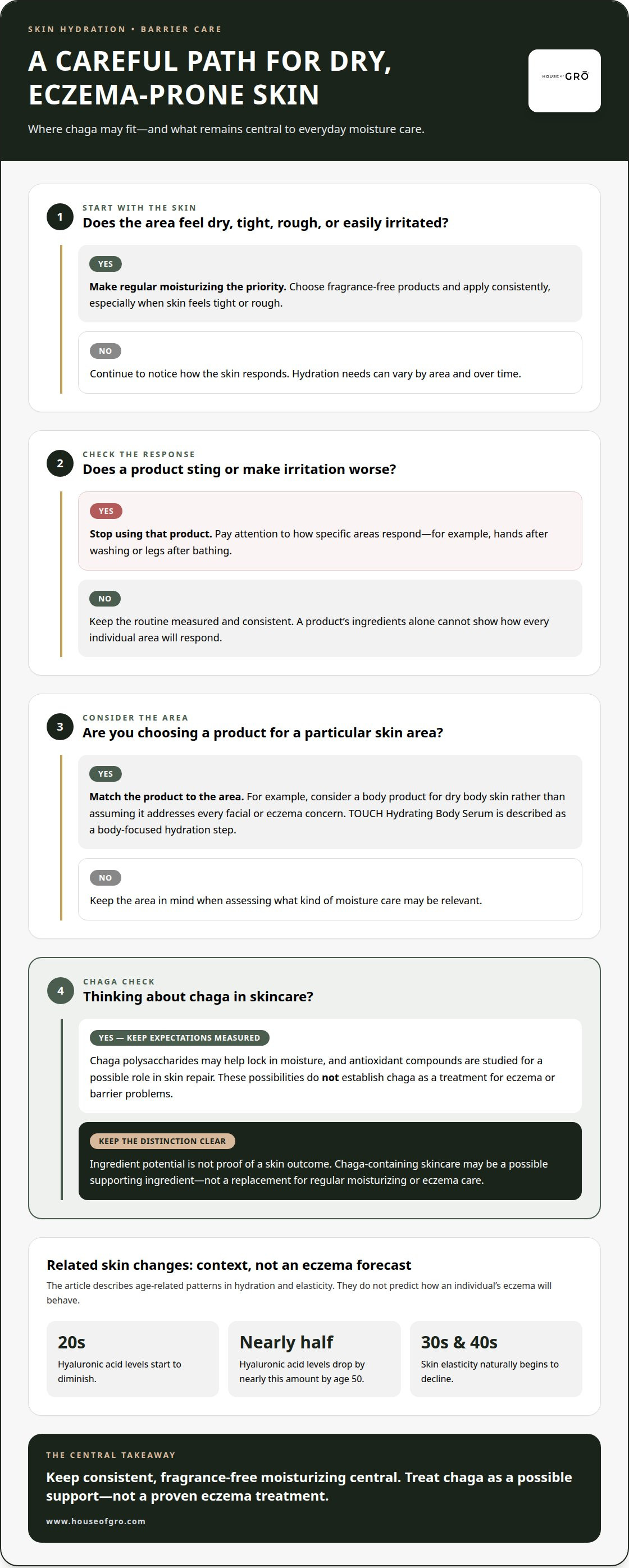
A healthy skin barrier helps retain moisture and shield skin cells from everyday irritants. Eczema can disrupt this surface, leaving patches dry, rough, or easily irritated. Chaga’s polysaccharides may help lock in moisture, while its antioxidant compounds are studied for a possible role in skin repair. These possibilities don’t establish chaga as a treatment for barrier problems. They help explain why researchers consider hydration, skin resilience, and chaga together.
Chaga also contains beta-glucans and chitin, compounds that may support collagen synthesis. Collagen contributes to skin structure, while elasticity describes how skin stretches and returns toward its shape. These processes are related but not interchangeable: supporting collagen production doesn’t automatically restore moisture or resolve eczema-related barrier problems. For example, a dry, itchy patch may need consistent moisturizing even if a skincare ingredient has antioxidant properties.
Skin changes with age, too. Hyaluronic acid levels start to diminish in the 20s and drop by nearly half by age 50. Skin elasticity naturally begins to decline in a person’s 30s and 40s. These patterns provide context for changing hydration needs, not a forecast of how an individual’s eczema will behave. Chaga’s possible effect on moisture retention should be considered separately from these age-related changes.
For eczema-prone skin, prioritize regular moisturizing with fragrance-free products. Apply moisturizer consistently, especially when dryness makes skin feel tight or rough. Notice how specific areas respond, such as your hands after washing or your legs after bathing. If a product stings or worsens irritation, stop using it. Chaga-containing skincare may suit some routines, but an ingredient’s presence alone doesn’t show that the finished product will support every skin barrier.
Traditional use of chaga and its potent-sounding antioxidant profile can make it appealing, yet ingredient potential and a proven skin outcome are different things. Choose skincare based on the needs of the area being cared for: a body product for dry body skin, for example, rather than assuming it will address every facial or eczema concern. For a body-focused hydration step, TOUCH Hydrating Body Serum can be considered as part of a measured routine. Keep moisturizing central, and treat chaga as a possible supporting ingredient, not a replacement for basic barrier care.
The page states that chaga supports skin repair and may improve skin texture and resilience. These potential effects relate to the skin qualities discussed here, but they aren’t proof that chaga treats eczema or corrects a disrupted barrier.
The product listing says the oil imparts moisture to the skin to enhance suppleness. Moisture and suppleness are therefore relevant considerations when assessing the body serum, but its effects on an individual area remain uncertain. Ingredient-level potential and a product description can help set expectations, but neither guarantees a particular result. Focus on your skin’s actual needs and response, and consider any chaga-related benefit a possibility alongside regular moisturizing, not a replacement for it.
3. Chaga in skincare products and diet
Chaga can be used in different forms, each involving a different kind of exposure. A serum is applied to the skin; tea and supplements are taken by mouth. These routes aren’t interchangeable and shouldn’t be assumed to affect eczema in the same way. For irritated skin, the practical distinction is whether an ingredient is applied to the affected area or consumed as part of a diet.
Can drinking chaga tea or taking supplements affect eczema? Chaga’s proposed antioxidant and immune effects don’t establish that drinking tea or taking supplements improves eczema. Oral use shouldn’t replace symptom care or be treated as a proven approach to eczema.
In skincare, chaga extract may appear in a cream or serum. Topical serums are sometimes described as absorbing quickly and reaching deeper skin layers, but that description doesn’t demonstrate a benefit for eczema. The full formula matters, too: the presence of mushroom extract alone doesn’t show how a finished product will feel on a particular dry or irritated patch.
Dietary use raises different questions. Some people consider chaga as tea or a supplement, while mushrooms can also be added to meals such as soups, stir-fries, or salads. These examples don’t establish that eating mushrooms changes eczema symptoms. Stress is another proposed factor in eczema flare-ups, but food or drink shouldn’t be assumed to manage stress or prevent a flare without evidence for that specific effect.
How should chaga products be used safely, and what doses have been studied? No dose has been established for treating eczema, so a serving of tea or a supplement shouldn’t be treated as a treatment dose. Follow the product directions, and consider ingredient purity, certification, and brand reputation when evaluating supplements. These checks can inform product selection, but they don’t prove a supplement treats skin symptoms.
For topical use, keep your routine simple. Apply one new product at a time and watch the treated area for changes such as increased redness or discomfort. Stop using it if irritation worsens. This makes it easier to distinguish a product reaction from other routine changes, such as a new cleanser or moisturizer.
Chaga’s polysaccharides and possible role in collagen production are areas of interest, not proof of eczema relief. They also don’t establish that oral supplements deliver moisture to the skin. If you choose skincare with chaga, focus on its intended use and how the formula fits into your routine alongside regular moisturizing. A calm, consistent routine makes it easier to notice how your skin responds.
4. Eczema and immune system imbalance
Eczema involves more than visible dryness or redness. Immune responses and skin condition are connected, which helps explain interest in the gut-skin relationship. Studies have linked poor gut health with eczema, acne, rosacea, psoriasis, and atopic dermatitis. However, a link doesn’t establish that gut changes cause eczema or that changing them will relieve symptoms.
Chaga enters this discussion through beta-glucans, which may act as prebiotics and nourish beneficial gut bacteria. That describes a possible interaction with gut microbes, not a proven effect on eczema. The immune system is complex; supporting beneficial bacteria doesn’t show that chaga can correct an immune imbalance or calm inflammation in a particular person.
Keep the distinction between a proposed mechanism and an outcome for the skin clear. A dietary ingredient may be discussed for its effects on gut bacteria, while eczema symptoms appear on the skin. These are related areas of interest, not interchangeable measures. For example, a change in digestion wouldn’t by itself show that an itchy patch has improved. Track skin symptoms directly.
A simple routine can make observations clearer. Note when itching, redness, or dryness appears, then record changes in food, stress, or environmental conditions. These are potential eczema triggers. A short, consistent record may help reveal patterns to discuss with a healthcare professional. It can’t prove that a particular food or chaga caused a flare, since several factors may change at once.
Chaga’s antioxidant compounds are also discussed in relation to skin and oxidative damage. Antioxidants may help protect skin cells from free radicals, but that possibility doesn’t establish an immune benefit or eczema relief. The same caution applies to adaptogenic claims about coping with stress. A proposed effect on stress doesn’t show that chaga prevents stress-related flares or replaces established eczema care.
For a grounded approach, separate three questions: what a product may do to gut bacteria, what changes you observe in your skin, and what is established for eczema care. Chaga’s prebiotic potential relates to the first question. A symptom record can help describe the second. Neither answers the third on its own. Don’t treat “immune support” as a precise promise: it doesn’t specify which immune response changes or how that change affects eczema.
This distinction matters when considering chaga for skin eczema. A gut-skin connection is an area of interest, not proof that chaga treats eczema through the immune system. Keep symptom care focused on the skin, and discuss persistent or worsening symptoms with a healthcare professional. This leaves room to explore chaga without confusing a possible mechanism with a demonstrated result.
5. Chaga and skin irritation, redness, itching, and eczema
Eczema can involve dry, itchy skin, redness, inflammation, and rashes. Some patches become thickened, cracked, or bleed. These symptoms affect more than appearance; they can also affect comfort and daily skin care. Chaga is discussed for antioxidant properties that may protect skin from damage and soothe irritation. That proposed support doesn’t establish chaga as a treatment for eczema symptoms.
Free radicals can damage skin cells, while oxidative stress describes an imbalance between these reactive molecules and the body’s defenses. Chaga contains antioxidant compounds, which helps explain interest in its possible effects on skin. Research into free radicals also touches on visible changes such as wrinkles. But a possible role in protecting skin from damage doesn’t show that chaga relieves eczema-related redness, itching, or cracking.
Chaga also contains betulinic acid, which has antimicrobial properties and may help fight bacteria and fungi that can cause skin infections. This isn’t evidence that chaga treats an eczema flare or prevents infection in broken skin. Eczema symptoms can include cracking and bleeding, so antimicrobial claims shouldn’t replace appropriate care for damaged or worsening skin.
Is chaga safe to apply topically to eczema-prone skin? Chaga isn’t established as a safe or effective eczema treatment. An ingredient list alone can’t show how a product will affect an irritated patch.
Could chaga cause allergic reactions or worsen eczema? A topical product may trigger a reaction in some people, and irritation can make existing symptoms feel worse. If redness, itching, or discomfort increases after applying a product, stop using it. Seek medical advice if symptoms persist or worsen.
For a careful routine, don’t introduce several new products at once. Use one new product at a time and pay attention to the area where you applied it. For example, if you use a serum on dry skin, note whether redness or itching changes afterward. This makes it easier to identify a possible connection than changing a cleanser, moisturizer, and serum together.
Chaga’s proposed antioxidant and antimicrobial effects concern different processes. Antioxidants relate to protection from free-radical damage; antimicrobial properties relate to certain microbes. Neither establishes relief from eczema’s immune and skin-barrier symptoms. Keep the takeaway clear: chaga may be an ingredient of interest, but it shouldn’t displace regular moisturizing or appropriate eczema care. For a considered skincare routine, explore skincare essentials.
Focus on your skin’s condition rather than a product’s marketing claims. Common eczema symptoms include dry, itchy skin, redness, inflammation, rashes, thickening, cracking, and bleeding. Noting which symptoms are present can make changes in care easier to discuss with a health professional. Chaga should remain an ingredient of interest, not a substitute for eczema care. If a product coincides with worsening discomfort or symptoms, stop using it and seek advice if symptoms persist or worsen.
House of GRŌ®
House of GRŌ® brings adaptogenic mushrooms and organic botanicals into skincare, including formulas featuring wild-harvested Chaga from Northern Maine. If you’re exploring chaga for skin eczema, keep the distinction clear: skincare can support a thoughtful routine, but it isn’t a proven eczema treatment. The range includes AT DAWN Rejuvenating Daytime Oil, AFTER DARK Restorative Night Serum, TOUCH Hydrating Body Serum, and EYE DETOX brightening oil. Choose a product according to the kind of skincare step you’re seeking, such as body hydration or a daytime oil. For persistent irritation, keep appropriate eczema care at the center of your routine. For questions about the brand’s skincare, contact House of GRŌ®.
Choose a thoughtful next step for your skin
Exploring chaga for skin eczema calls for a clear distinction between interest in an ingredient and care for symptoms. Let your skin’s needs guide your next step. If persistent or worsening symptoms affect your daily comfort, include professional guidance in your care plan. If you’re refining a skincare routine, make intentional choices based on what you want it to support.
There’s no need to turn uncertainty into pressure. A considered approach leaves room to learn, notice what suits your routine, and make changes at a steady pace. For guidance on skincare options that fit your preferences, connect with House of GRŌ®. Choose the next step that feels clear and grounded, and give your skin care the same calm attention you bring to the rest of your day.
Frequently Asked Questions
What is Chaga Mushroom?
Chaga is a tree-growing fungus known scientifically as Inonotus obliquus. It has a history of traditional use in parts of Asia and Eastern Europe. Unlike mushrooms commonly served as food, chaga grows on tree bark. Its compounds, including polysaccharides and polyphenols, are studied for possible biological effects. These properties explain its place in wellness conversations, but don’t by themselves show a benefit for eczema-prone skin.
What scientific evidence exists for chaga and eczema?
Scientific evidence does not establish chaga as an eczema treatment. Proposed effects on inflammatory signals, antioxidant activity, or gut bacteria are possible areas of study, but they don’t demonstrate that chaga reduces eczema symptoms in people. For example, an antioxidant effect isn’t the same as proven relief from itching. Treat chaga as an ingredient of interest, not a replacement for established eczema care.
What are the side effects and risks of using chaga?
The information here doesn’t establish a specific side-effect profile, so chaga can’t be assumed to be risk-free. For topical use, try one new product at a time and stop if irritation worsens. When evaluating supplements, consider ingredient purity, certification, and brand reputation.